

Product Leadership | Strategy + AlignmentExecutive buy-in with cross-functional alignment priority
Tying vision to P&L, and convincing the teams behind it.
Most enterprise roadmaps don’t fail the idea; they fail to convince business units who must execute while deprioritizing other initiatives.
Value, Delivered
I set direction that ties product vision to P&L, then get organizations aligned enough to fund and execute it. In practice that means asking business units to trade autonomy they are not ready to trade, for a market position the status quo will not reach. I have run that trade across 13+ automotive brands, 5 financial services business units, and 53 global sales stakeholders, none of whom reported to me.
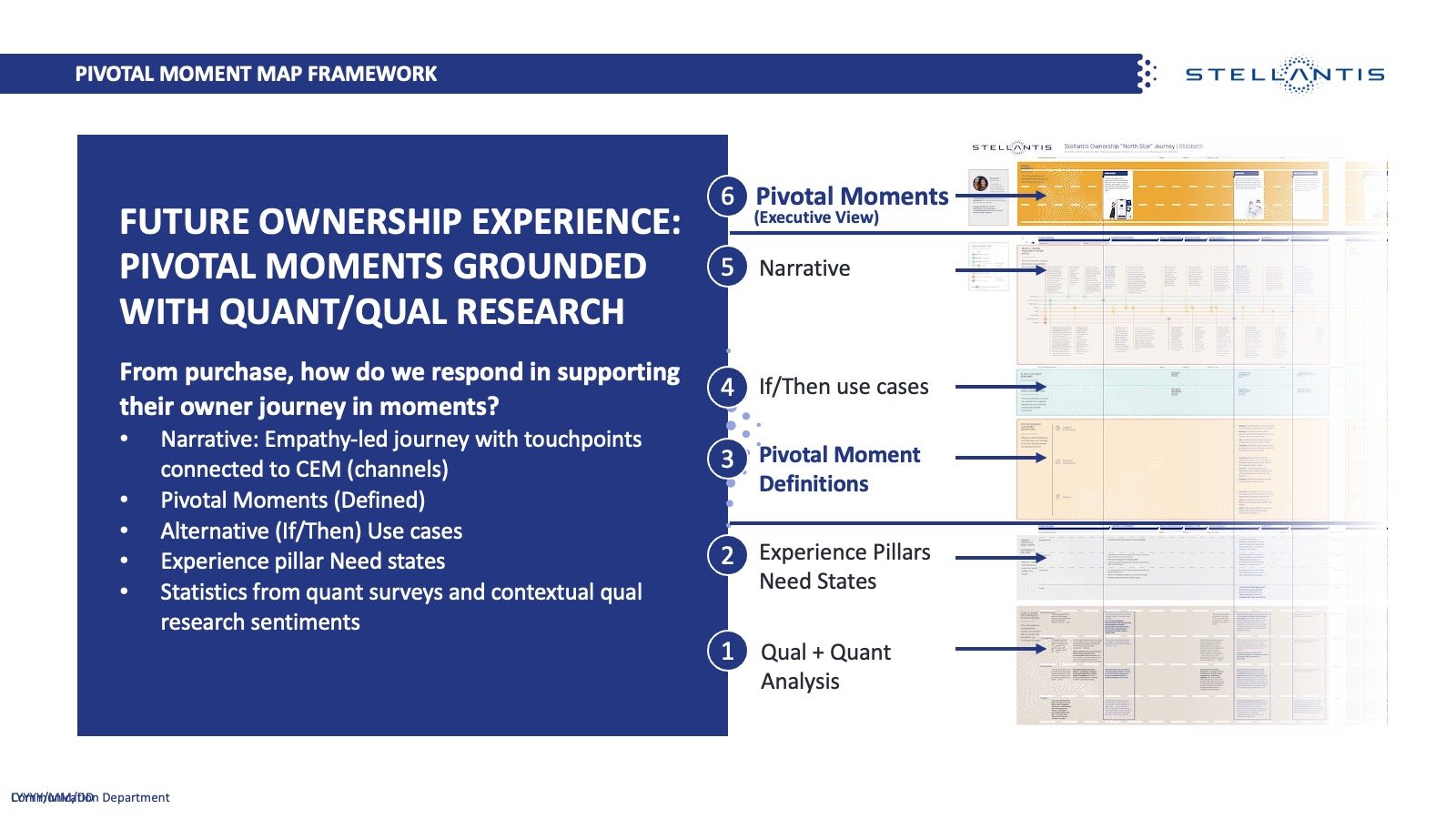
Most of the alignment work is subtraction. At Caterpillar I reduced 53 stakeholder interview analysis over 78 impacts into 5 executive themes and one future-state process, which meant telling regions their local variant was not making it in. At Stellantis I built orchestration around 22 shared owner moments instead of one shared platform, giving up real technical efficiency so 13+ brands could move without a multi-year platform war. Deciding what does not go in is what makes the rest fundable.
Once direction is set, I connect OKRs and KPIs across functions so improvements compound instead of competing, and I put prioritization authority close to the people who see the customer. Shared ownership is what makes alignment survive the first budget review.
Product vision and multi-year roadmap staging with ROI forecasting
P&L ownership, investment cases, and executive funding approval
Operating model and organizational design across business units
PRDs anchored to value proposition and defined success criteria
Policy and process design where they constrain the product
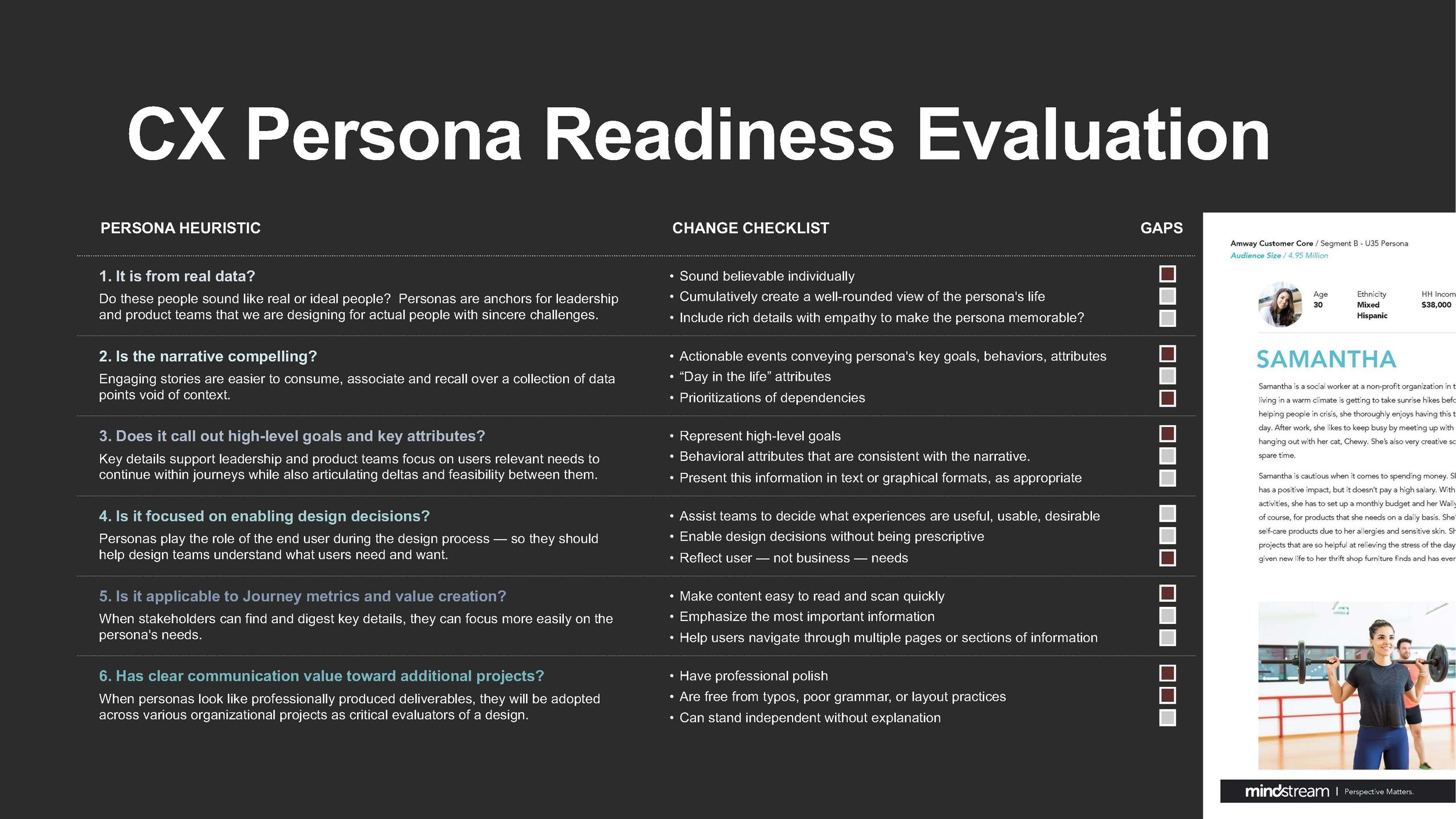
Segmentation and persona strategy tied to addressable market
Service blueprinting across owned, partner, and front-line channels
Collaborative outcomes
TIAA and Nuveen: Co-owned roadmap direction across a dual B2C and B2B organization ($1.3T to $1.5T AUM), converting a five-year executive transformation plan into staged annual roadmaps across 5 business units with $24M+ in P&L oversight.
TIAA Essentials Hub: Built a modular omnichannel education hub in 2 months. Contribution actions rose 105%, rebalancing 140%, advice session initiation nearly 3x, engagement nearly 2x YoY. Shorty Award winner.
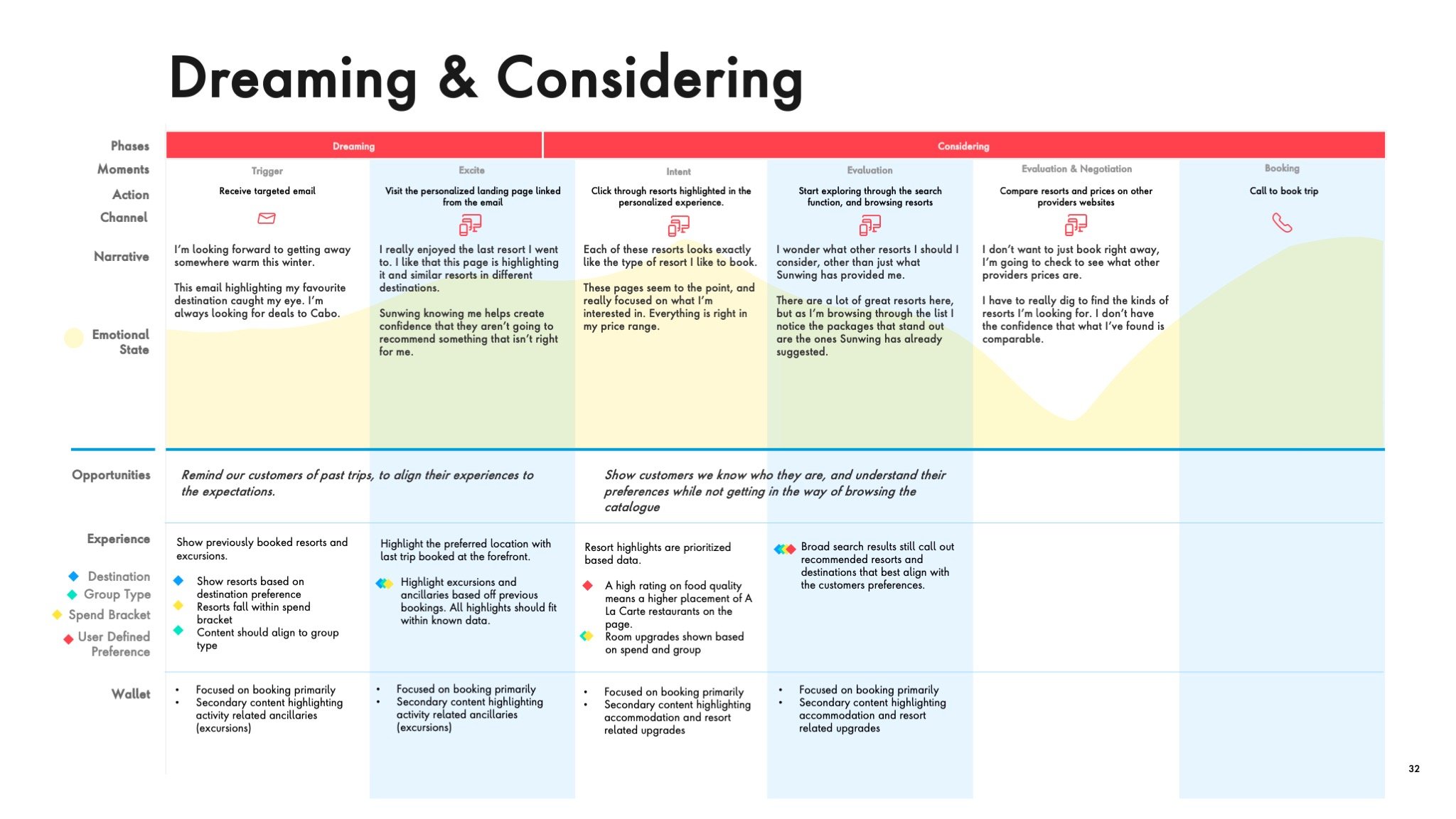
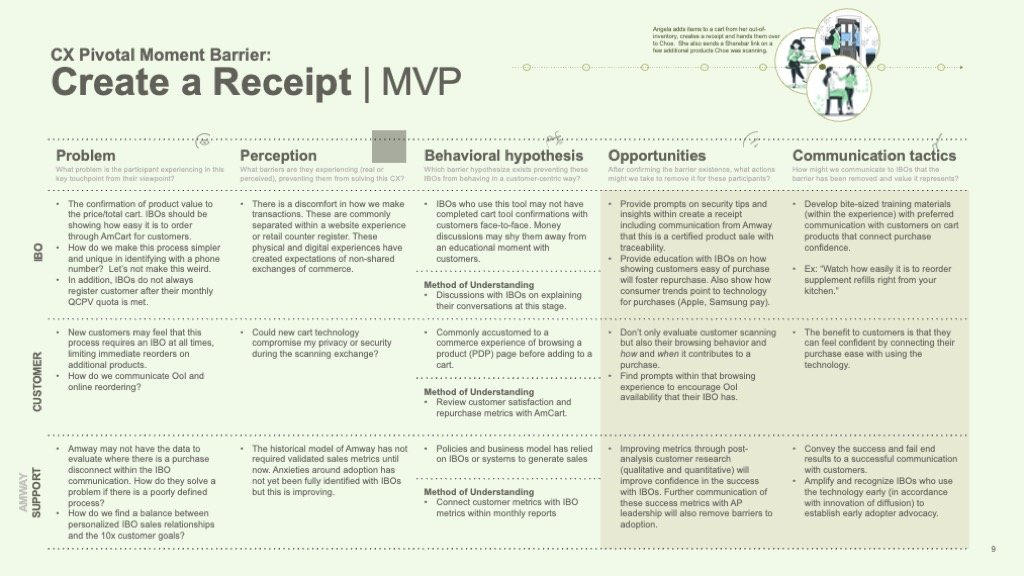
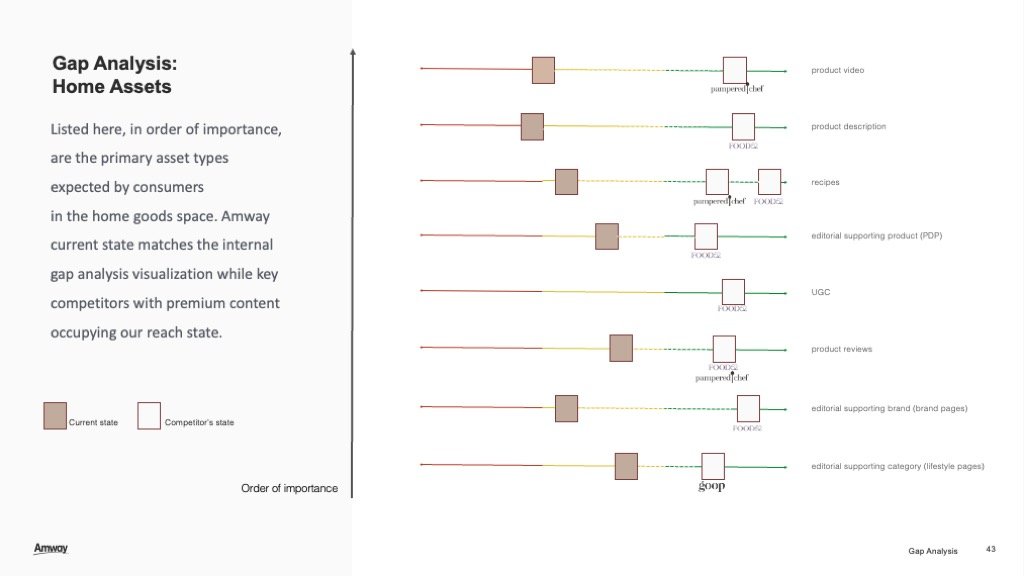
Amway: Drove strategy for an $8.9BN omnichannel commerce transformation; the roadmap and service blueprint lifted revenue $313MM. The 18-month executive roadmap was described internally as "never done before" at that level.
Stellantis: Orchestrated global OEM marketing consolidation across 13+ brands. Roughly 23% journey efficiency, a $2.4B agency consolidation win, supporting $720MM in cost-out targets.
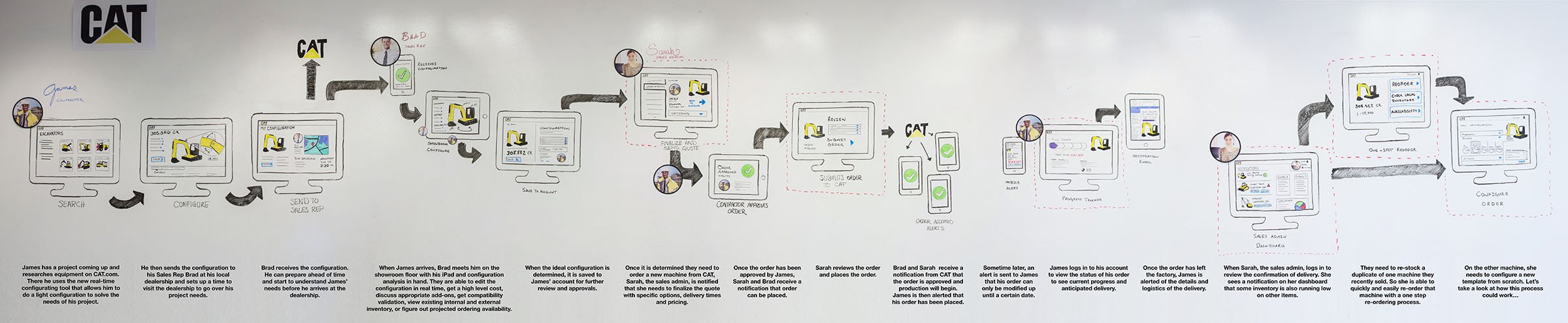
Caterpillar: Distilled research across 53 global sales stakeholders into 5 executive themes and one agreed future-state process. Quoting accuracy up 38%, sales up 19.7% on a $6.9B pipeline, and a $34M development contract.
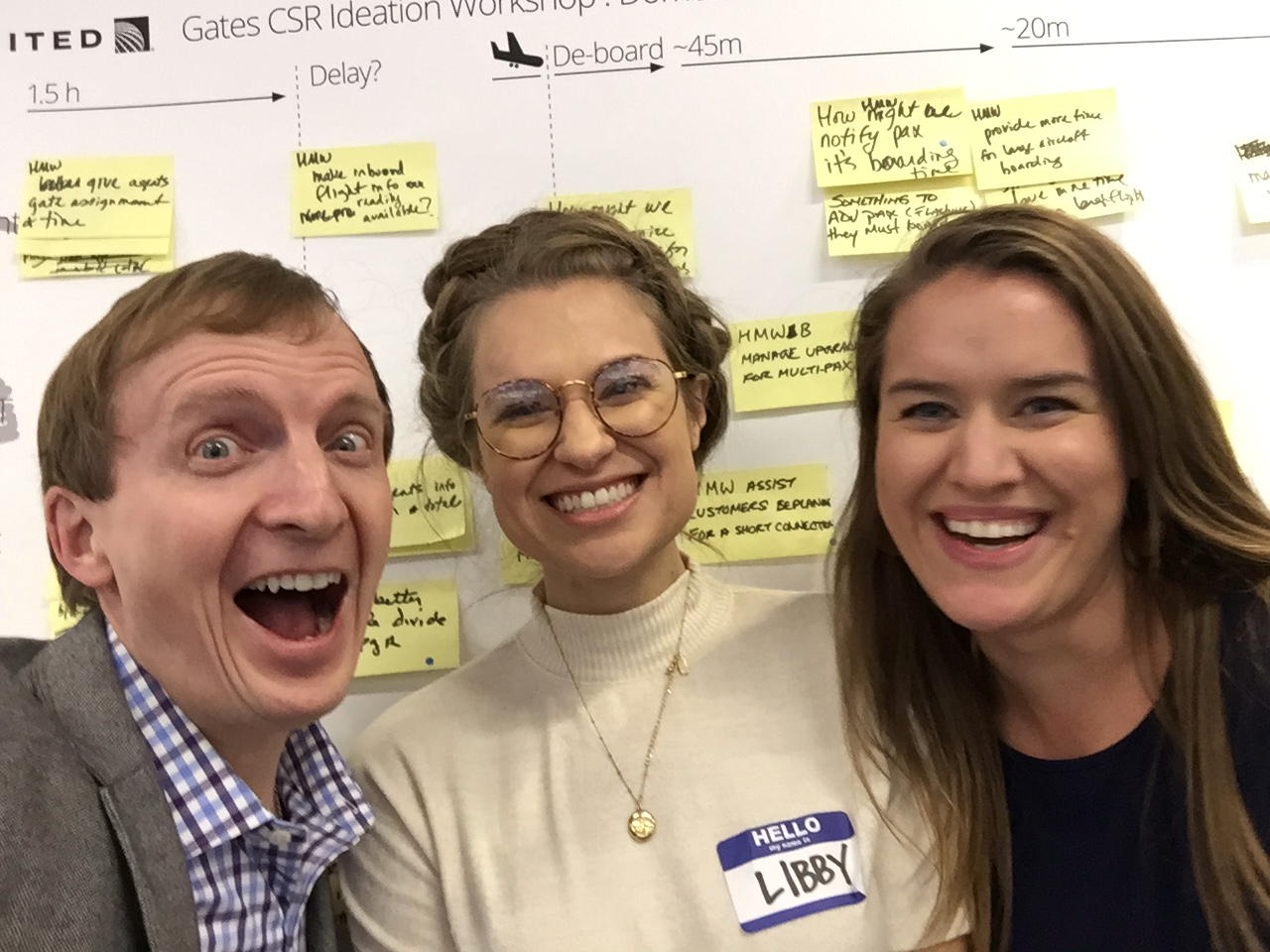
United Airlines: Built two narrated "north-star" airport futures in a 3-week window that secured executive approval for 3 new IoT initiatives inside a $4.2B to $4.5B capital cycle.
Marriott: Set the north-star strategy for a 42M-member reservations and loyalty platform, replacing a 14-year-old agent system ahead of a three-program loyalty integration that lifted occupancy four points to 72%.
Samsung: Streamlined journey-orchestration across marketing teams and influenced C-suite for $37.2MM in profits.
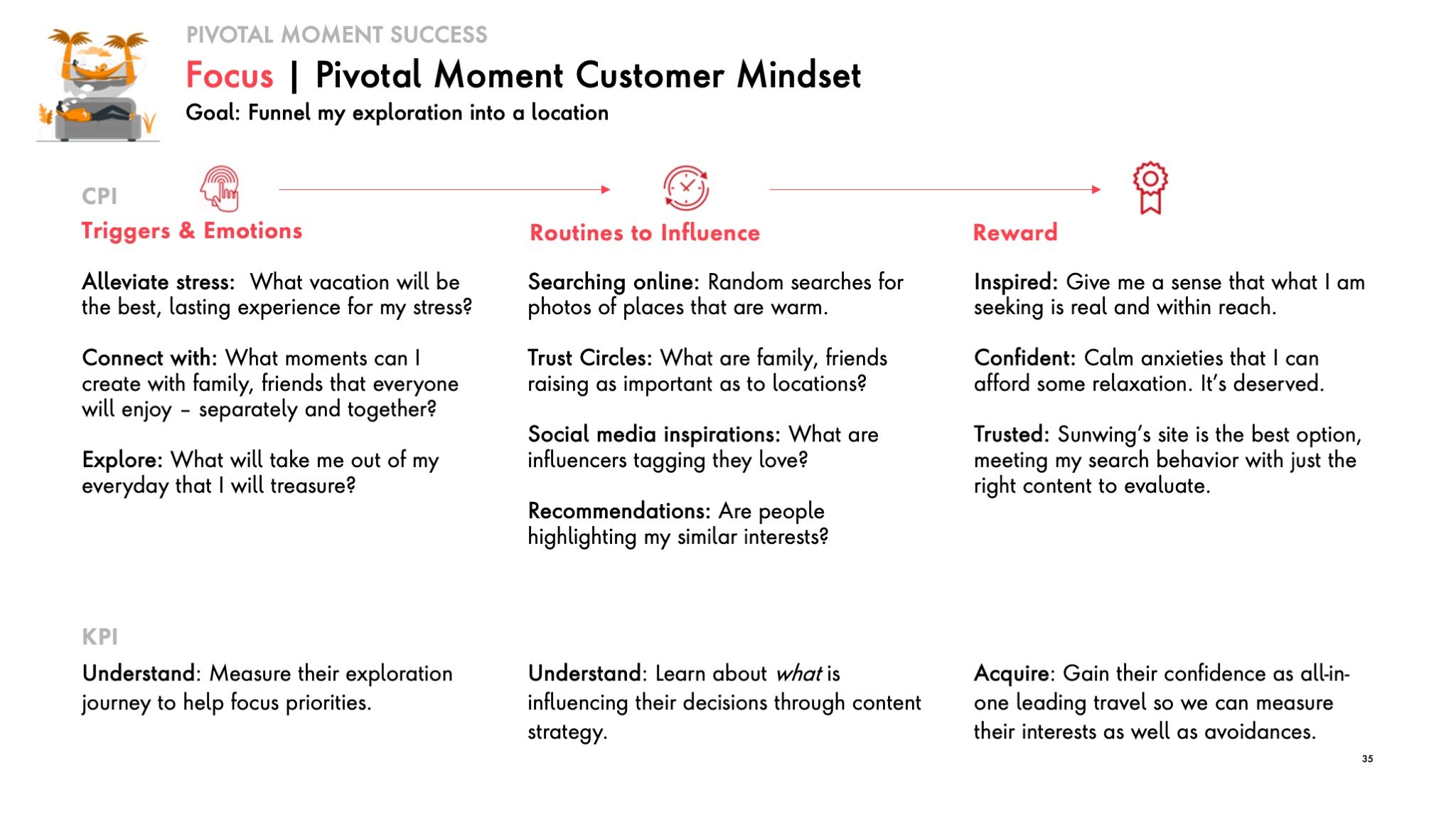
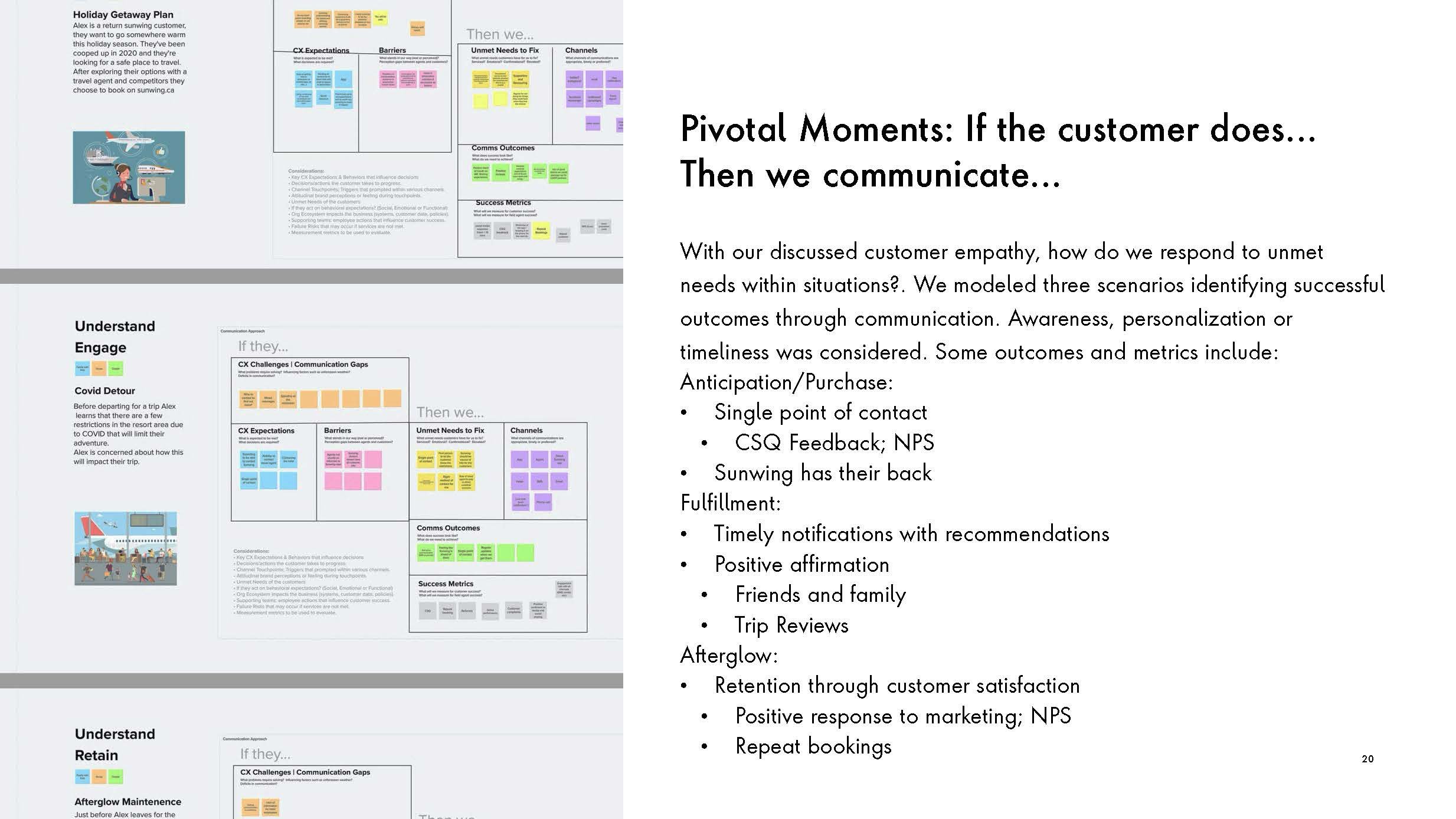
Breadth and framework: 29 digital transformations across financial services, travel, retail, hospitality, automotive, and healthcare. Founder of the Pivotal Moments™ framework connecting omnichannel marketing to product requirements.
KPIs in case studies
“In order to carry a positive action we must develop a positive vision.”
— Dalai Lama














A Kaizen approach to tactical strategy…
Featured Case Studies

Amway
B2B Commerce & App Unification

Featured Case Study: Product Vision, Roadmap
When a roadmap required a product vision and blueprint.

Core Problem: Amway lacked a shared, data-driven roadmap connecting sales feedback to product and inventory decisions.
Business Impact: With news of the pandemic emerging, budgets were being carefully evaluated as an RFID packaging launch was being planned to improve customer return sales data. Without a coordinated plan, tactical decisions were made without visibility into long-term business priorities.
Solution: Deliver a B2C commerce access: Delivered a three-pronged solution: the vision, readiness, and a service blueprint connecting a new customer experience with legacy business sales dependencies that expedite sales.
Results: The delivered executive and management 18-month roadmap with cross-functional accountability and confidence, described internally as "never done before" at this level. Press release confirms 2020 sales of $8.5B, up 2% over 2019, the growth environment this roadmap was built to support.

Marriott
Call Center Platform Transformation
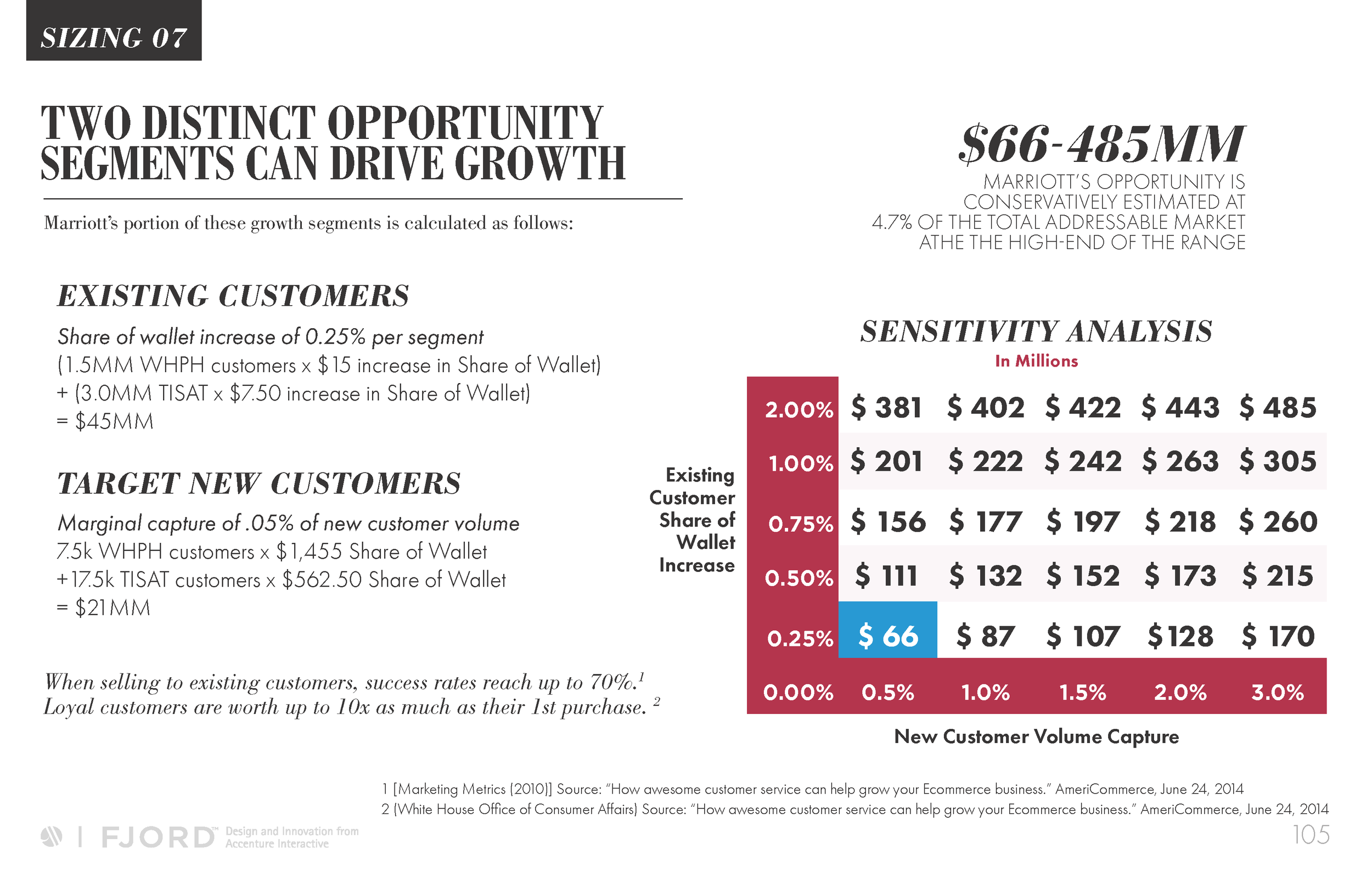
Featured Case Study: Customer Reservations and Loyalty
When product awareness required transforming front-line advocacy.

Core Problem: Agents were using a linear, legacy (14-year-old) platform built when there was a single-tier hotel platform. Constraints in process and content management led to large deltas between the customer site and reservations, care, and loyalty applications. In addition, IT needed to expedite support, training and iterative releases by a third.
Business Impact: Marriott needed a Salesforce Lightning agent tool but had no design standards to guide their development migration, risking millions in throwaway development work and amplifying agent friction across full shifts without Lightning-specific guidance.
Solution: Delivered a complete development framework from UX and visual design standards with executive “north-star” SLT buy-in, validated from multiple prototypes with agents. Delivered a validated, agent-tested design system ready for development, reducing training time and improving usability.
Results: Platform delivery paved the way for Marriott's $13.6B Starwood SPG acquisition that immediately followed (09/2016), creating world's largest hotel brand (5,700+ hotels), integrating three separate loyalty programs into one by 2018, exactly the kind of agent-facing complexity this engagement addressed.
Archetypal customer conflicts I solve
-
![Two white smartwatches with round faces and white bands are placed on a light gray surface. One watch display is black, and the other is blank.]()
Product Conflict
Customers Do Not Adopt the Value
One-time or multiple purchases are met with misunderstood value, complicating growth.
Symptom: Customers do not project their lifestyle values with your organization’s goals.
-
![Close-up of a black landline telephone on a black wall plate, mounted on a white wall.]()
Services Conflict
Lifestyles Do Not Align to the Brand
Consumers are missing the value to your services or digital products.
Symptom: Customers do not effectively utilize a service in intended touchpoints of their journey.
-
![Two people exchanging a mobile phone at a checkout counter, with a payment terminal and eyeglasses on the table.]()
Conversion Conflict
Consumers are Not Becoming Customers
Consumers are aware of, or respect your brand but for unknown reasons are not buying in.
Symptom: Customers speak favorably of the brand, yet recursive purchases are impacted.
-
![Black and white Facebook-themed candies on a white surface, with icons like thumbs down, thumbs up, and the Facebook logo.]()
Reach Conflict
Brand Awareness is Not Extended
Effective channel marketing is not successful in key markets of loyalty or growth.
Symptom: Targeted audience messaging is not changing/aligning behavior to brand adoption.


Secondary Case Studies

TIAA
Essentials Hub: Simplifying investment strategies for life
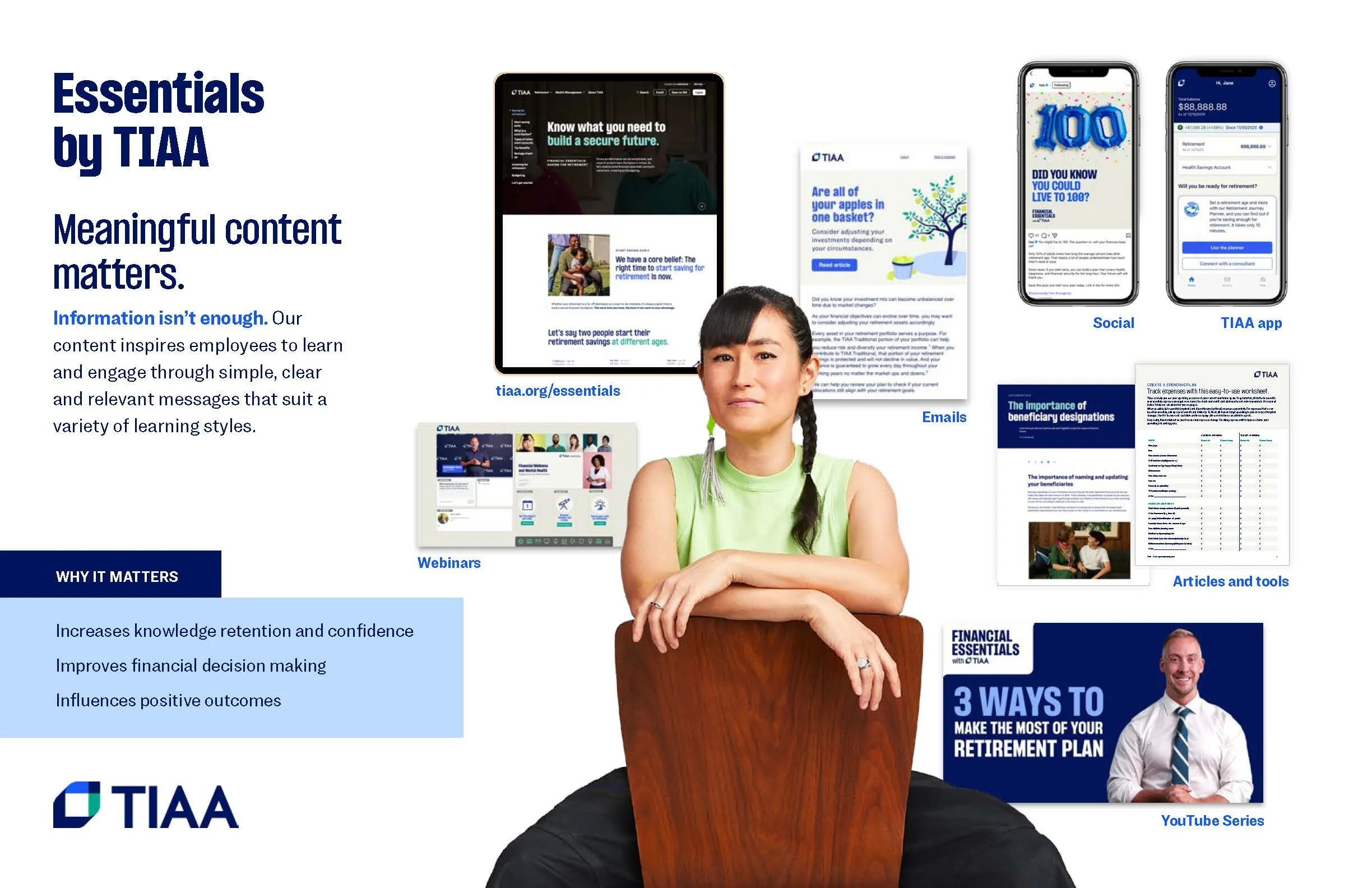
Secondary Case Study: TIAA Essentials Hub
Simplifying financial terms demand rethinking, thinking.
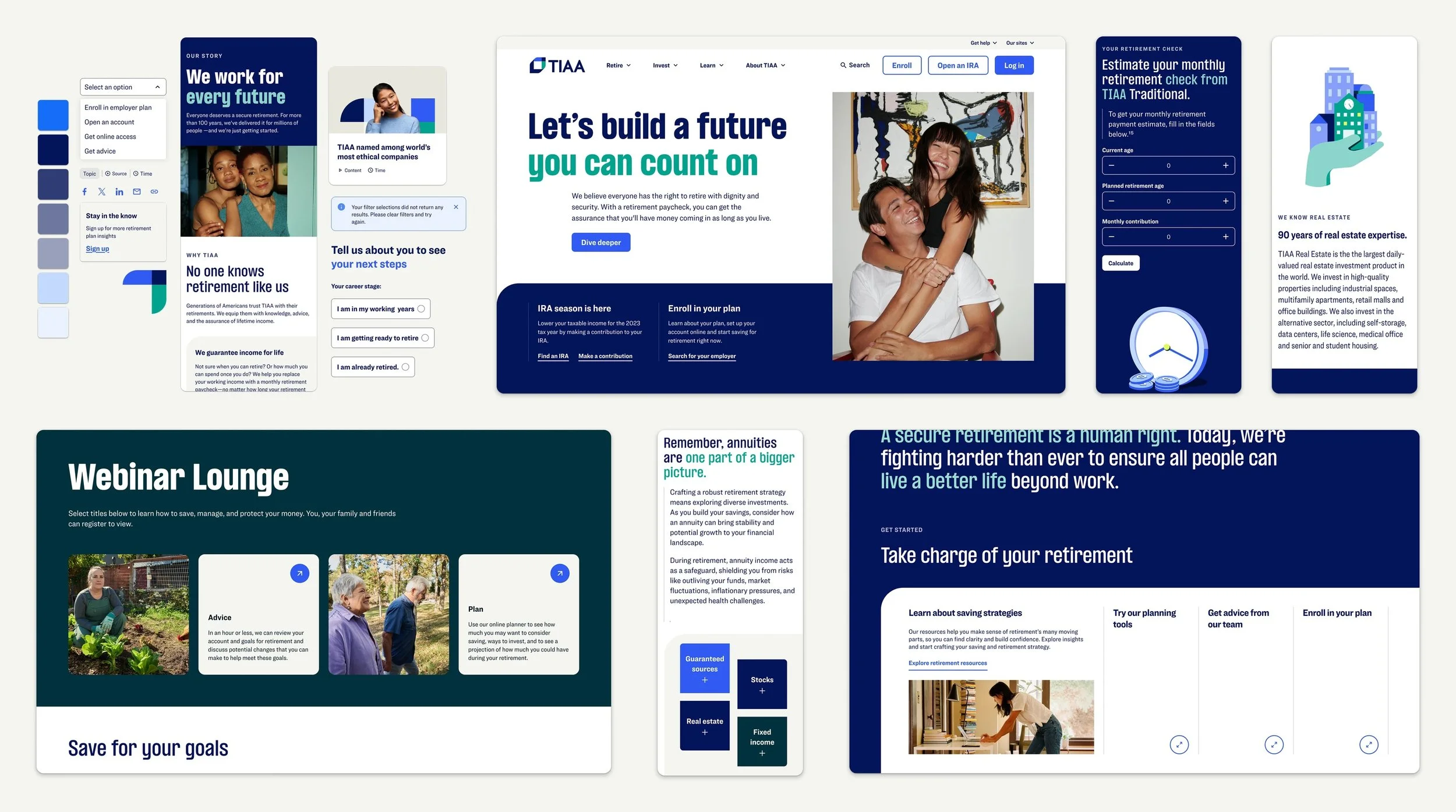

Core Problem: Financial contributions were dropping from uncertainty that was widespread and fragmented from unverified advice that kept people from acting. Federal Reserve data shows nearly half of American households had no retirement savings in 2022; only 31% of non-retirees felt their savings were on track, down from 40% the year before.
Business Impact: Financial contributions were suffering, impacting TIAA’s ability to invest in new AUM. Delayed financial decisions also compounded savings and retirement gaps over time with TIAA value.
Solution: Built a modular, omnichannel education hub grounded in simple language and financial goal clarity with credibility in just two months.
Results: Nearly doubled engagement YoY and grew advice session initiation almost 3x. Increased contribution actions 105% and rebalancing 140%. Won a Shorty Award.

United Airlines
Executive EX2CX 5-year Vision

Secondary Case Study: Site Optimizations
Forecasting 5-year roadmap demands creative storytelling

Core Problem: United’s executive leadership plans five years out across 380 global regulated airports with flight systems in a unionized industry. Leadership financial priority planning demanded a compelling vision for future airport/gate investment, not another slide deck.
Business Impact: With budgets in the billions, there was risks in losing annual budget allocations for agent and CX experience investments. We needed to inspire agreements and funding to chart initiatives that navigate airport roll-out complexity.
Solution: Built two visualized, narrated future “north-star” experiences in a three-week timeline and limited budget. Storyboard and presented to C-Suite with illustrated video on how future airport and agent technology will create seamless travel experiences.
Results: Drove strong leadership engagement and secured approval for three new IoT airport initatives with total capital expenditures at $4.2B in 2018 and $4.5B in 2019 (SEC filings). This vision work directly shaped where a meaningful slice of that spend on with confidence on business priorities and ROI.
Executive Vision Considerations
Tertiary Case Studies

Samsung
Virtual Store and Bespoke Hub App Experiences

Tertiary Case Study: Site Optimizations
When a virtual store requires measured physical shopping

Core Problem: COVID closed showrooms for Samsung's highest-converting segment, with no unified digital alternative across five business units.
Business Impact: During a critical global disruption that needed to promote a successful launch of their bespoke kitchen and their virtual storefront to mitigate physical-store browsing impacted by COVID, Samsung needed to understand shoppers in the physical store to replicate the behavioral goals. Highest-value buyers had nowhere to evaluate or purchase during a critical revenue period.
Solution: Design and deliver a virtual store experience across Samsung.com for engagement and supplemental sales that redesigned a new Virtual Storefront. We also built a new augmented reality app for personalized product visualization within customer’s kitchens on benefit and visual aesthetics.
Results: Drove 11% YoY online sales growth and a $54.6M attributable revenue lift. Increased orders 9% within 6 months of the AR app launch. US consumer electronics e-commerce grew 8% YoY within a challenging 2021 as COVID-era gains cooled industry-wide. Samsung's 11% overall growth beat competitor category benchmarks by 3 points in the same year.
(Some content restricted, request for full case study)

Caterpillar
Global PLC Salesforce Platform

Tertiary Case Study: Customer Success
When customer success required product process collaboration.

Core Problem: Dealers were losing sales because they lacked the right Caterpillar technical support, not because they were undertrained. Global sales and product lifecycle processes were fragmented across business units with no shared ownership model.
Business Impact: Sales were slumping from either excess configuration or project misalignments. Leadership had no unified view of the sales cycle while profit outlooks were being cut and jobs eliminated. Global business units had fragmented operations that could not easily connect across complex organizational product expertise in quote cycles due to role ownerships and process discrepancies across the sales cycle.
Solution: Connect strategic customer success sales to unify a (SFMC) PMLC pipeline validated from global process research. Led global research across 53 sales stakeholders, distilled it into 5 critical executive themes, and delivered an executive storyboard that aligned Caterpillar's global product catalog model to one future state sales process. Envisioned with a north-star prototype.
Results: Gathered executive agreement on a unified PLC sales strategy that realigned global organization with unified roles. Supported revenue growth $17.7B (2018), a $7.2B two-year increase from increased sales pipelines. Caterpillar's total consolidated public revenue for those years went from $38.5B in 2016 and $54.7B in 2018. Led Accenture to a $34M development contract.
Success milestones in product cultures
Examples of Vision Statements
-
“We're in business to save our home planet.”
-
“Enrich the lives of consumers through technology, whether they come to us online, visit our stores, or invite us into their homes.”
-
“Every Nike employee shares one galvanizing mission: To bring inspiration and innovation to every athlete in the world.”
-
“Human connection and handcrafted beverages come together in a comfortable place for humanity, different from home or work.”
-
“To be the world’s most loved, most efficient, and most profitable airline.”