

Product Leadership Manage | Execution + Agile (& AI) OpsAgile roadmaps demand journey-focused moments that cut waste
Hitting dates with real budgets and smaller teams
The constraint has changed. Shipping now means holding business readiness and model reliability at the same cadence, not choosing between them.
Value, Delivered
I run delivery organizations that hit dates, manage genuine P&L and SLA budgets, and build people who outgrow the role. Recently at TIAA and Nuveen, I inherited 20-plus stalled initiatives with no cadence in delivery. I set progressive milestones for already-funded work while developing an intake funnel. It is the reason my biweekly deployment held at a 97% on-time SLA straight through a staffing reduction. Smaller, well-run teams with levels of autonomy become faster under my leadership.
In DORA terms: deployment frequency at 42 releases a year across 5 business units, lead time down roughly 41%, and at United a change failure rate of zero across three years and 27 releases a year, in an operation running 4,700 daily flights. Predictability under constraint is the whole job.
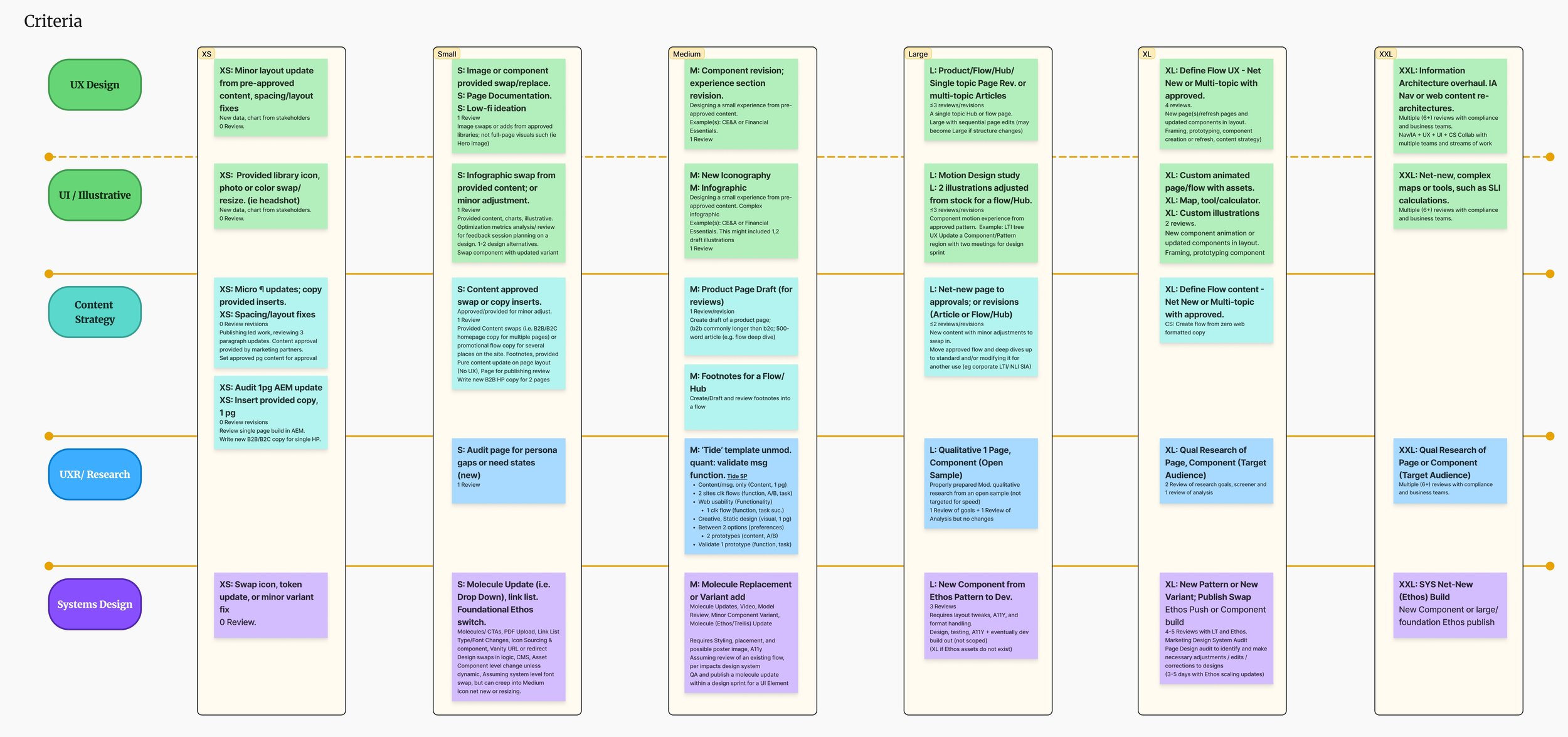
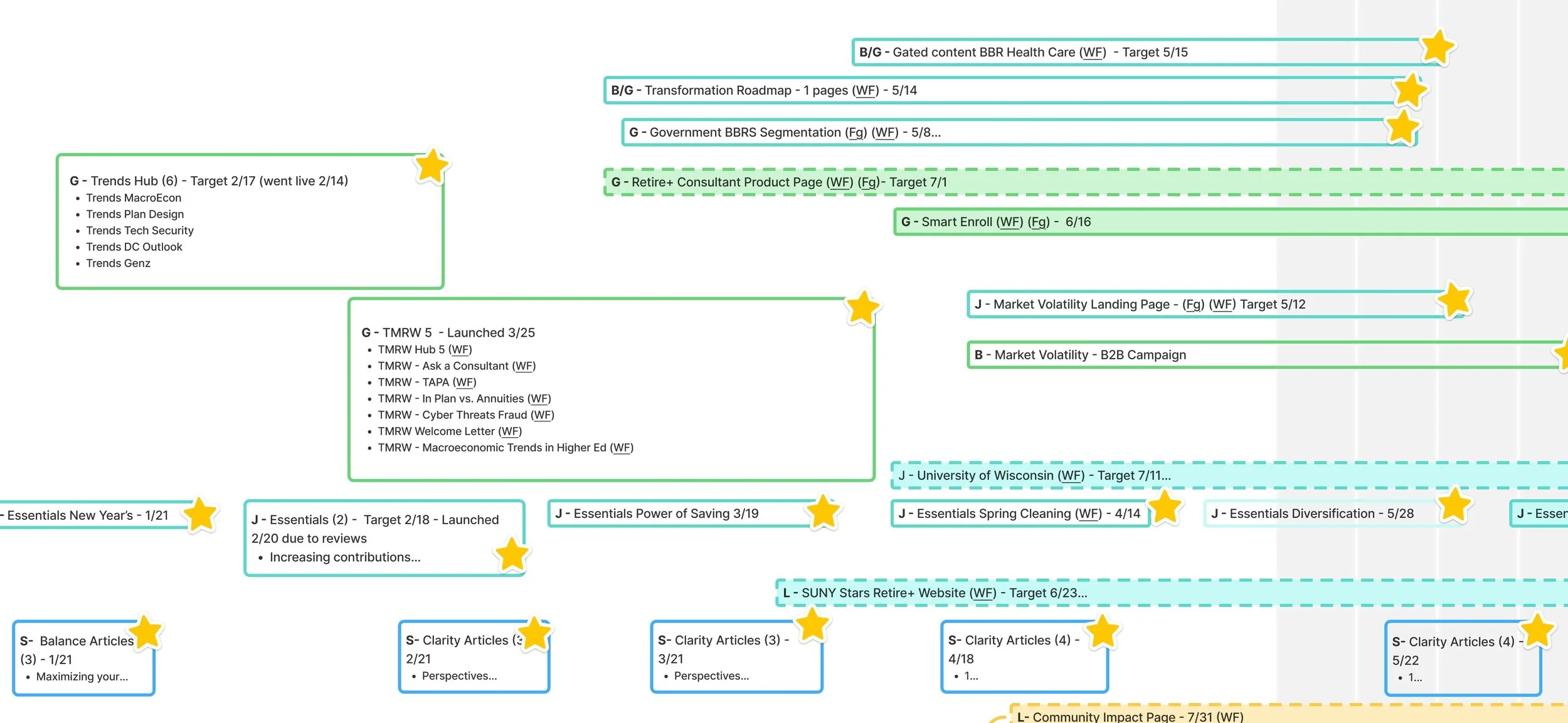
Prioritization is where I spend judgment. I score readiness, feasibility, and business priority into a single number through WSJF and t-shirt sizing, so what ships next is an output rather than a negotiation. On the AI side I identified 11 agentic touchpoints across the product pipeline and matured 5 into production, against an industry baseline where roughly 88% of enterprise agentic pilots never reach production.
Collaborative outcomes
Portfolio and P&L management: CAPEX, OPEX, contingency and management reserves, risk analysis
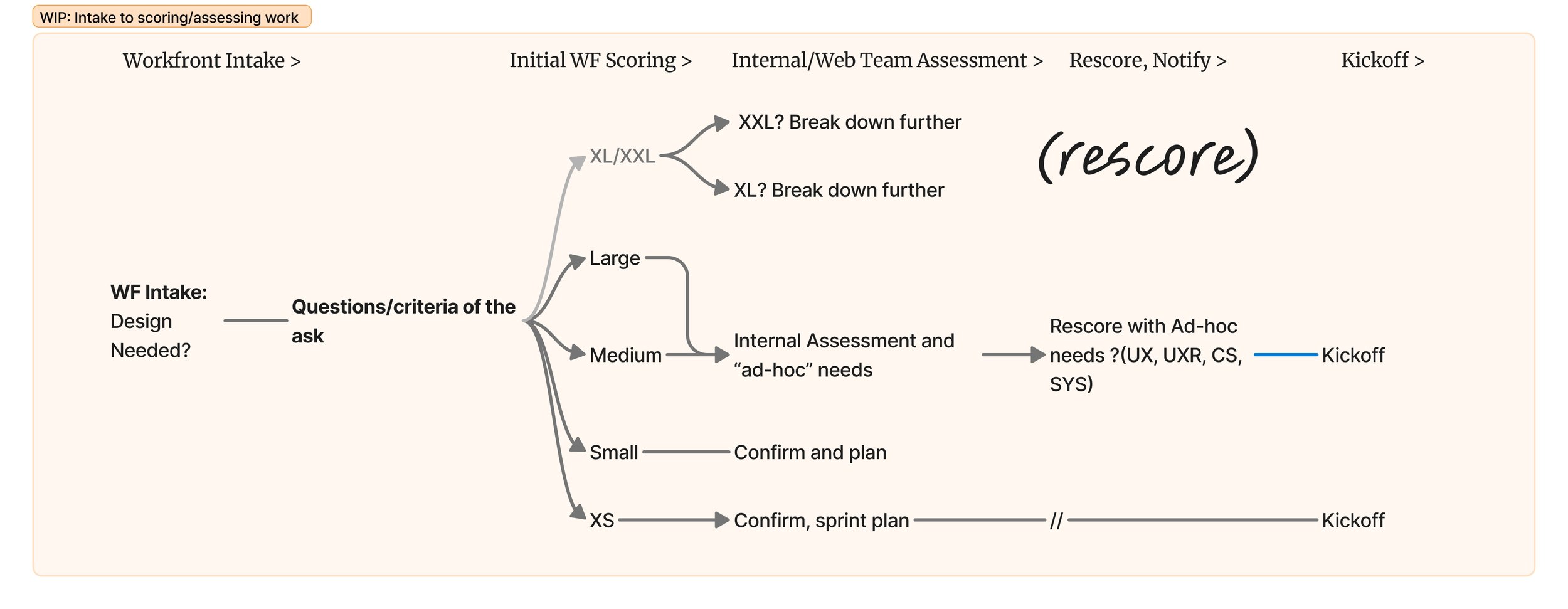
Weighted intake and prioritization: WSJF, t-shirt sizing, readiness scoring
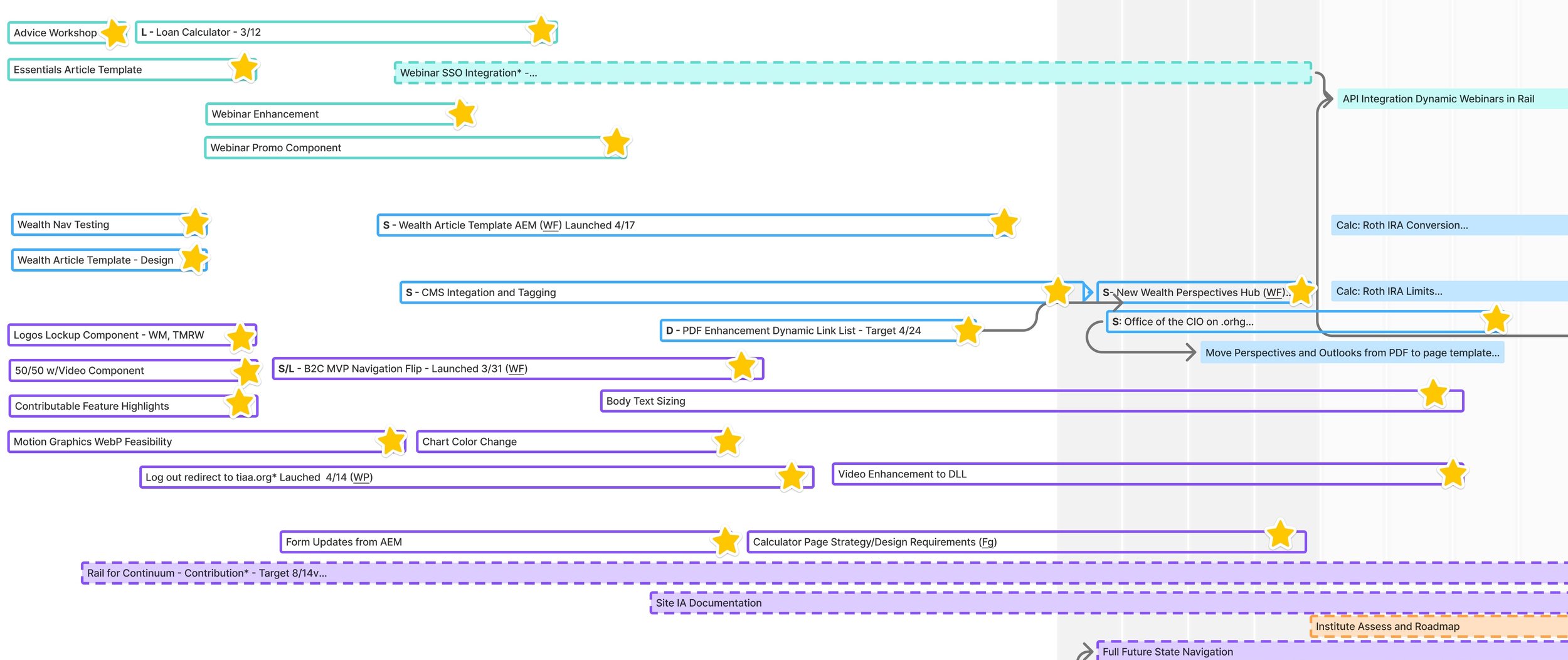
Release train and cadence design across multiple business units
PRDs, jobs-to-be-done, use cases, and user story definition
Sprint planning, backlog health, and critical path management
Delivery instrumentation: deployment frequency, lead time, change failure rate
Agentic AI evaluation and production readiness inside the delivery pipeline
Cross-functional operating rhythm across marketing, data, design, and engineering
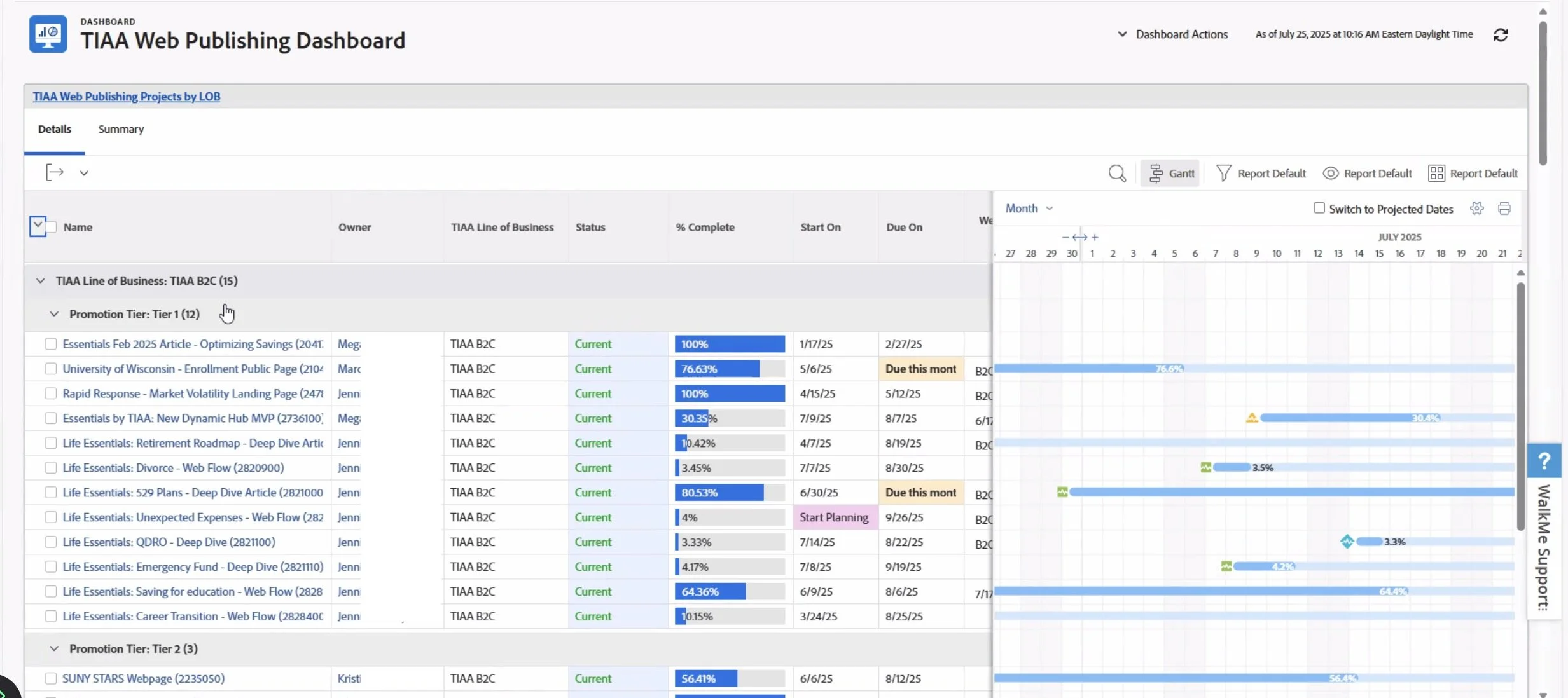
TIAA and Nuveen: Inherited 20-plus stalled initiatives with no release cadence. Moved both organizations to biweekly deployment within 2 months and held a 97% on-time SLA through a period of reduced staffing.
AI in the delivery process: Identified 11 agentic AI touchpoints across the product pipeline and matured 5 into production skills, against an industry baseline where roughly 88% of enterprise agentic pilots never reach production.
Intake and prioritization: Defined net-new t-shirt sizing and weighted WSJF prioritization funnels for scoring readiness, feasibility, and business priority into a single number across 5 business units. Removed 11 intake bottlenecks and lifted delivery velocity roughly 41%.
Documentation and handoff: Rebuilt the Jira and Confluence knowledge architecture, raising documentation maturity from 10% to 50% at the halfway milestone and cutting dev-to-design handoff ticket redundancy 40%.
United Airlines: Implemented United's first agile sprint migration off legacy waterfall in 2016. 27 on-time releases a year and zero downtime for 3 years across 4,700 daily flights and 356 airports, on $47MM in delivery budgets with engineering, QA, and finance risk assessment.
United (cost): Saved $8.4MM YoY through WSJF prioritization and research-validated user stories; cut engineering costs 12 to 43% through design-thinking prioritization workshops.
Portfolio scale: $24M+ P&L oversight across 5 business units and 42 deployments a year, on-target against a five-year executive transformation plan.
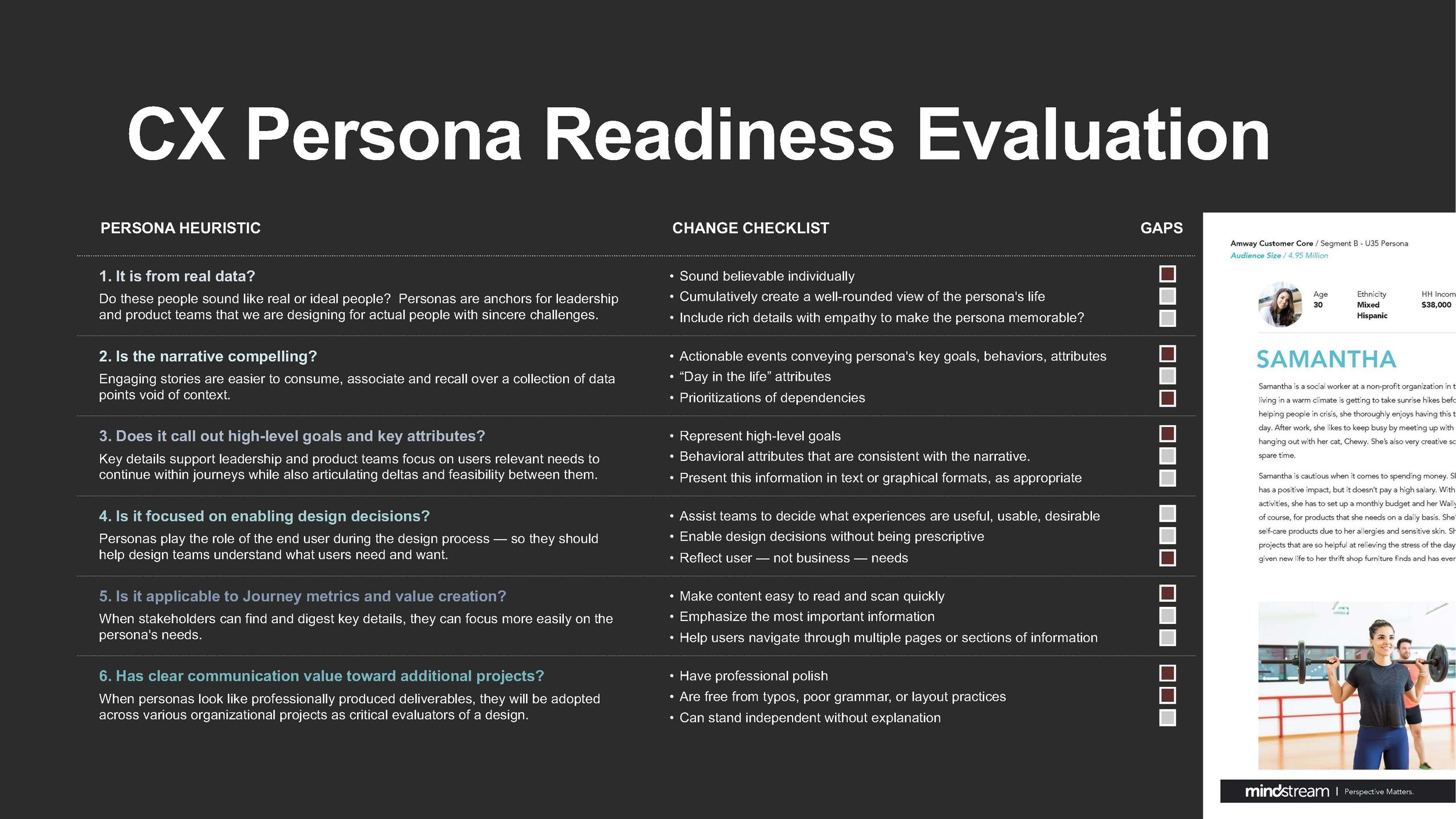
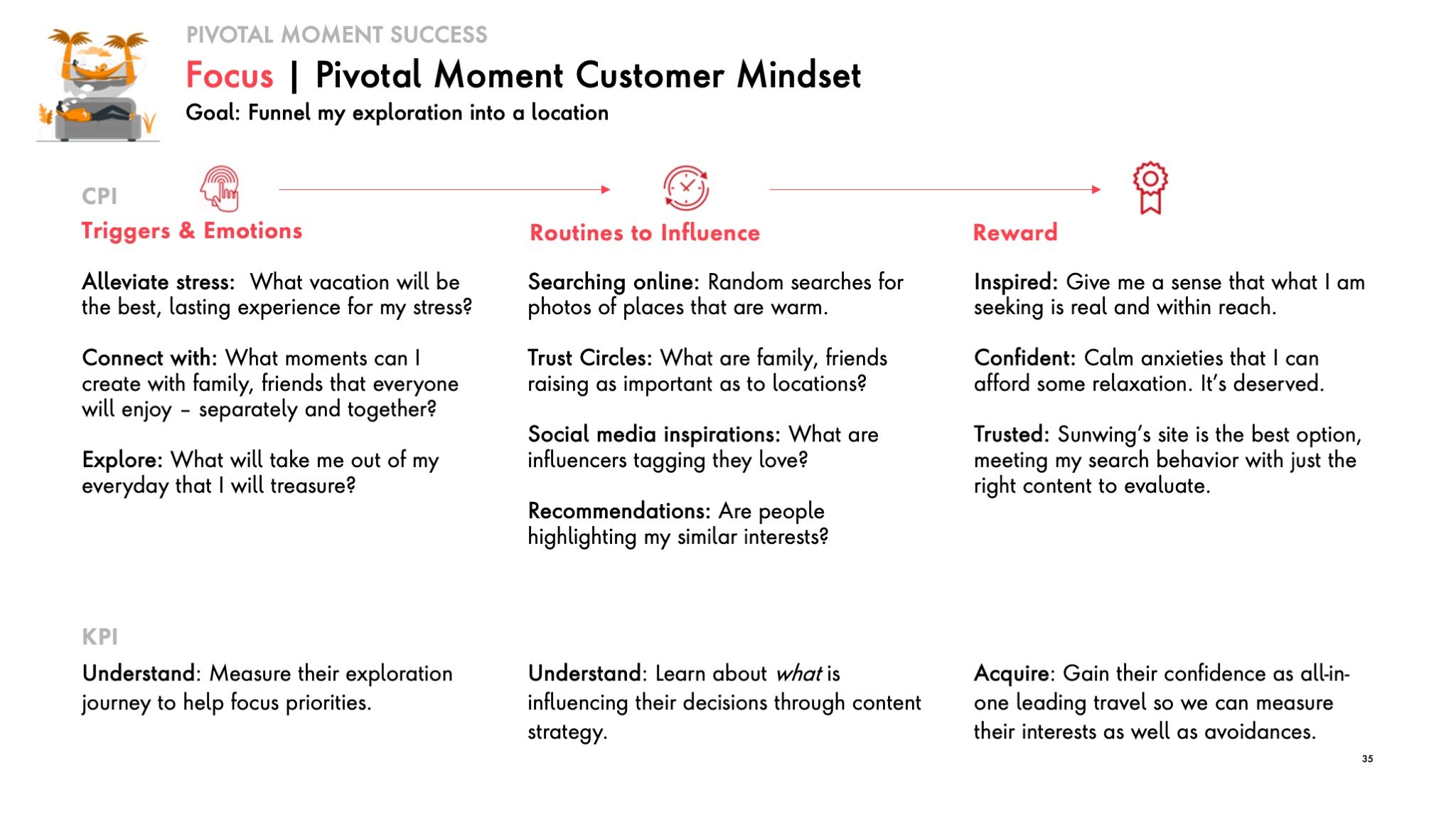
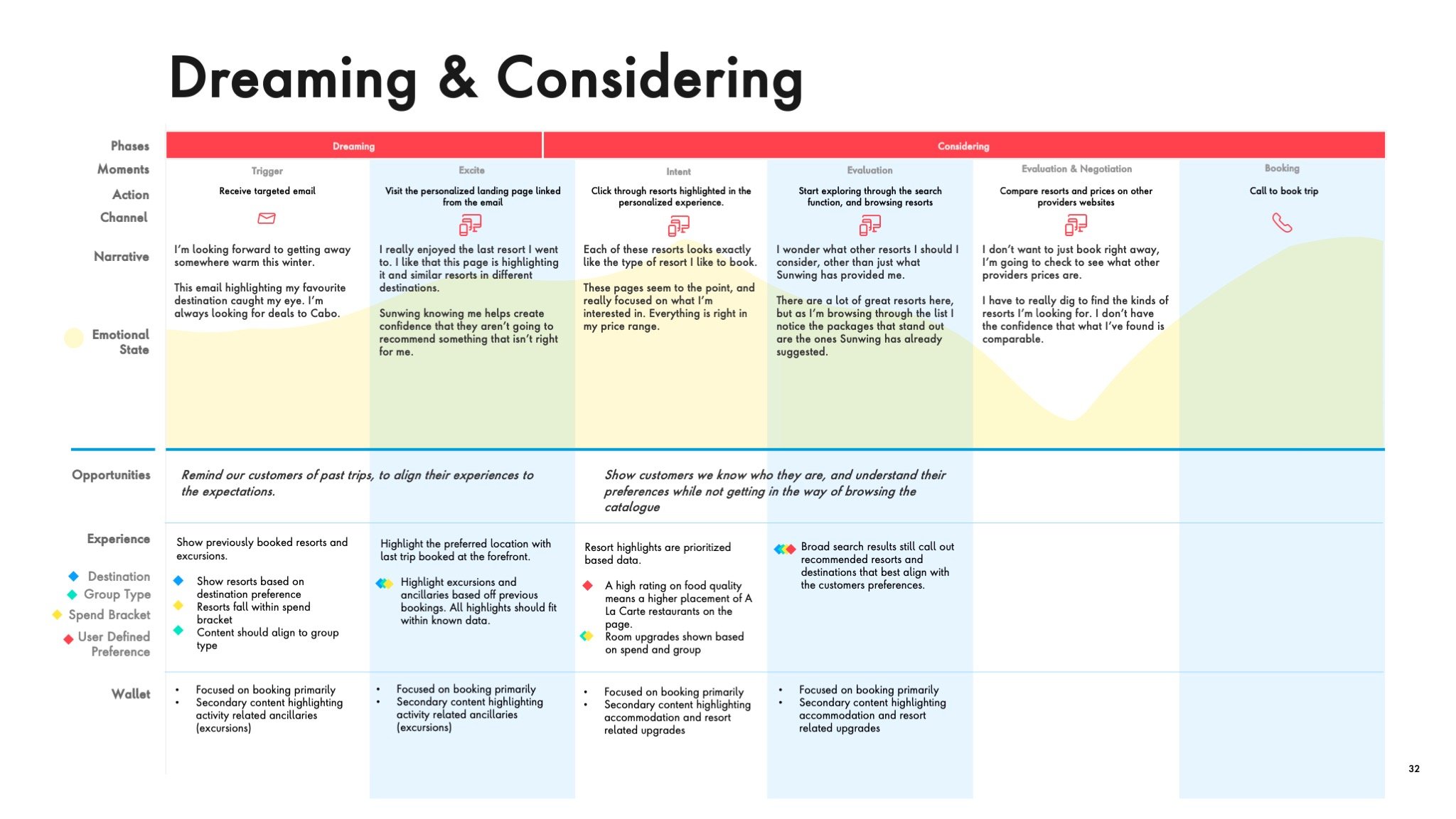
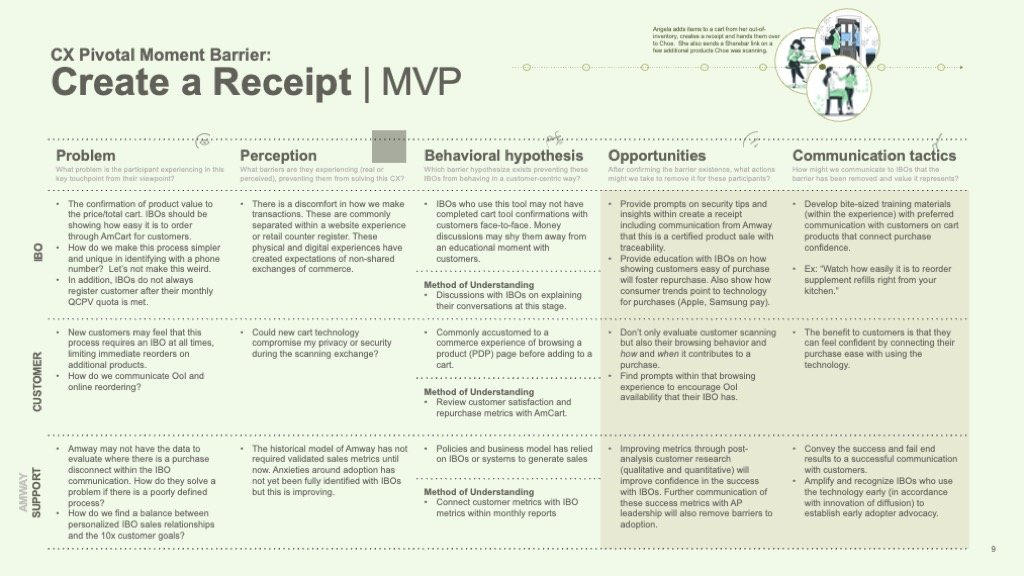
Roadmaps under pressure: Amway MVP roadmap with explicit barriers-to-success and launch-readiness gating during pandemic budget review. Sunwing CDP and CRM rollout sequenced to AOV lift across the "flight to resort" journey.
Team and throughput: Grew the team 2.2x and coached onshore and offshore scrum teams against OKR milestones. Roughly 17% improvement in speed-to-market from best-practice training, with "above expectations" performance 3 consecutive years.
KPI success
“People who can focus, get things done. People who can prioritize, get the right things done.”
― John Maeda

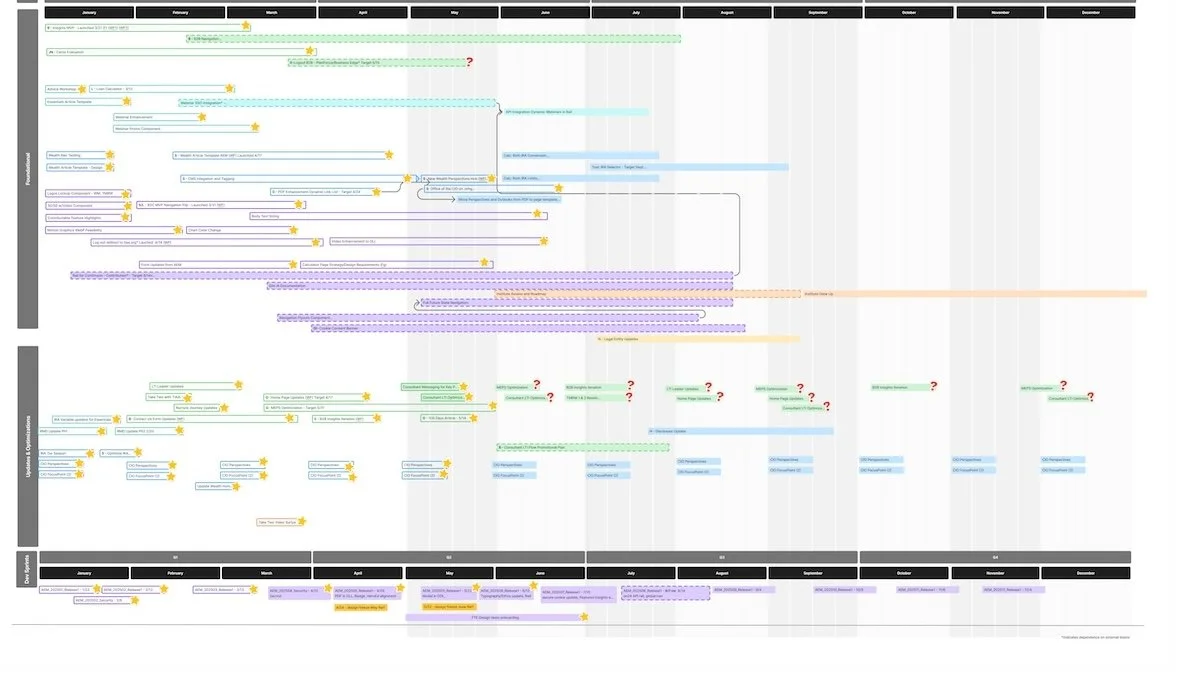


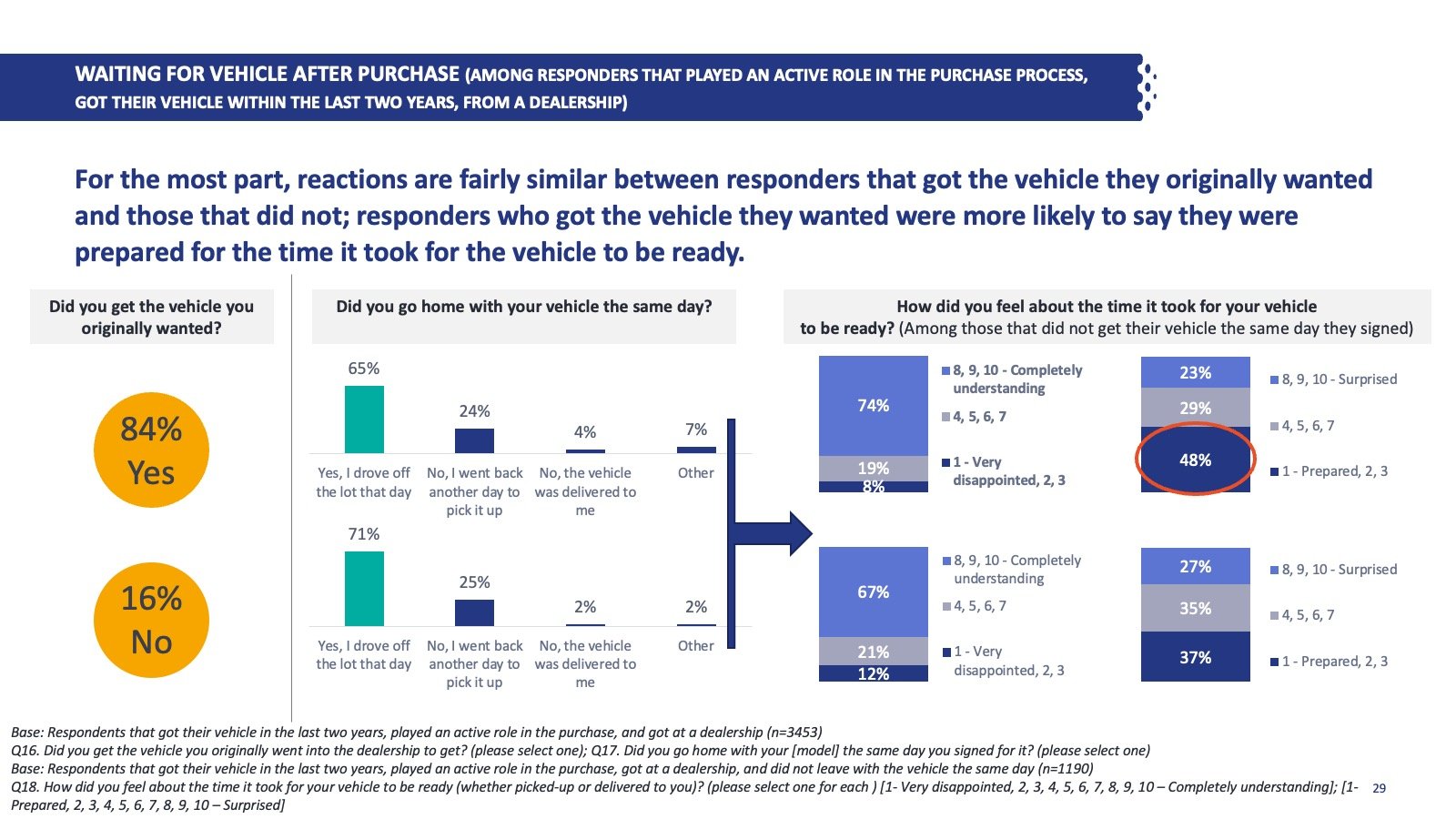
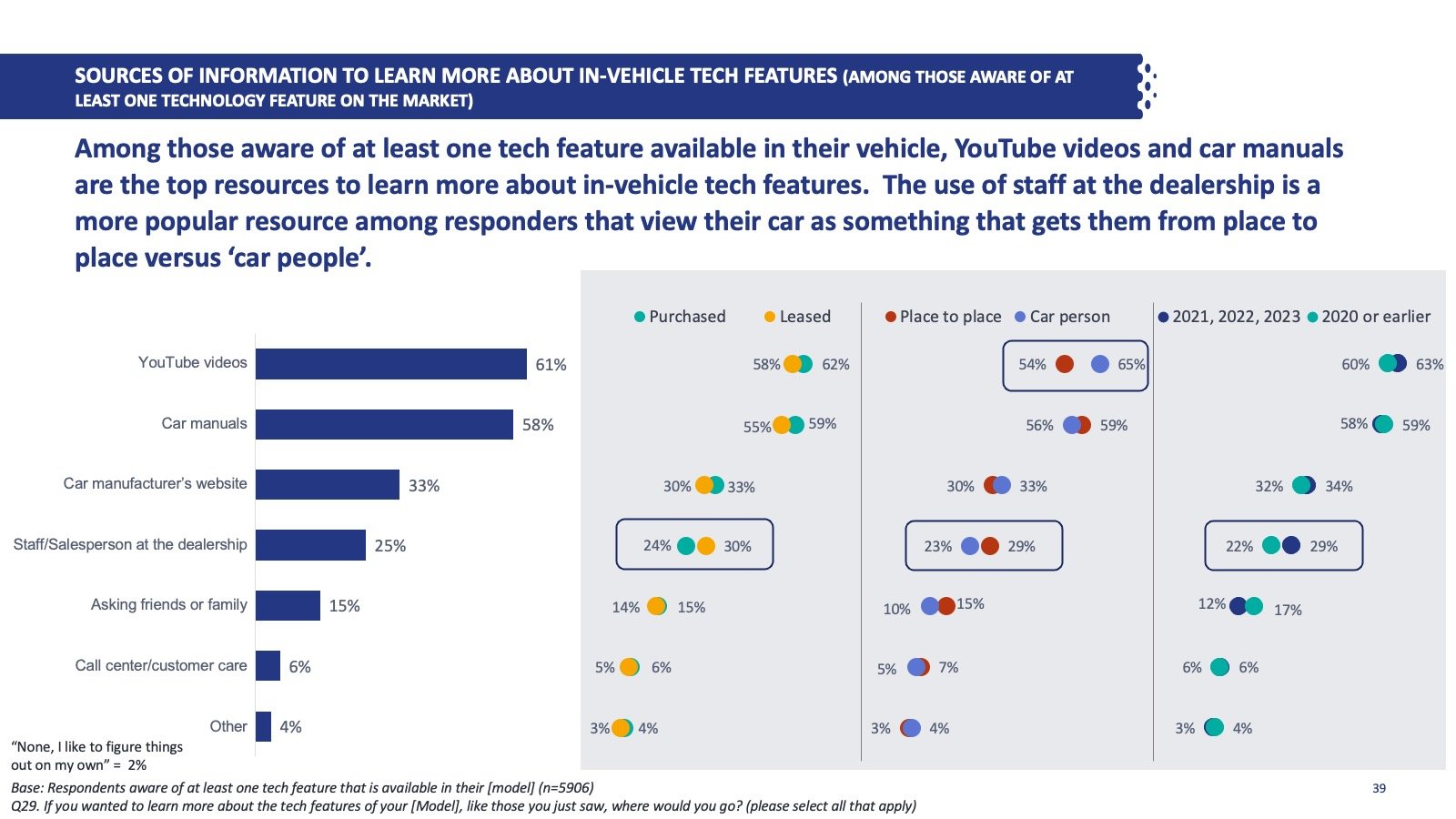

“Coordinating team KPIs that drive “clarity ops” into collective priorities between EX and CX solutions.”
― Josh Nard
Featured Case Studies

Amway
B2B Commerce & App Unification
(Part 2)

Featured Case Study: Product Vision, Roadmap Part 2
When a roadmap required a product MVP vision with barriers to success.
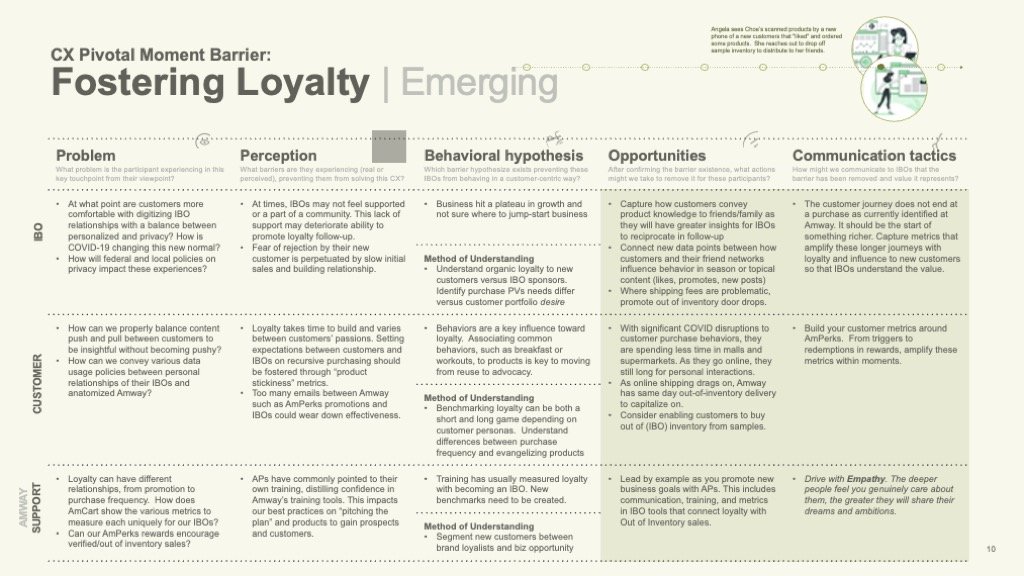
Core Problem: Amway lacked a shared, data-driven roadmap connecting sales feedback to product and inventory decisions.
Business Impact: With news of the pandemic emerging, budgets were being carefully evaluated as an RFID packaging launch was being planned to improve customer return sales data. Without a coordinated plan, tactical decisions were made without visibility into long-term business priorities.
Solution: Deliver a B2C commerce access: Delivered a three-pronged solution: the vision, readiness, and a service blueprint connecting a new customer experience with legacy business sales dependencies that expedite sales.
Results: The delivered executive and management 18-month roadmap with cross-functional accountability and confidence, described internally as "never done before" at this level. Press release confirms 2020 sales of $8.5B, up 2% over 2019, the growth environment this roadmap was built to support.

TIAA
T-Shirt Intake Sizing and AI Jira workflows
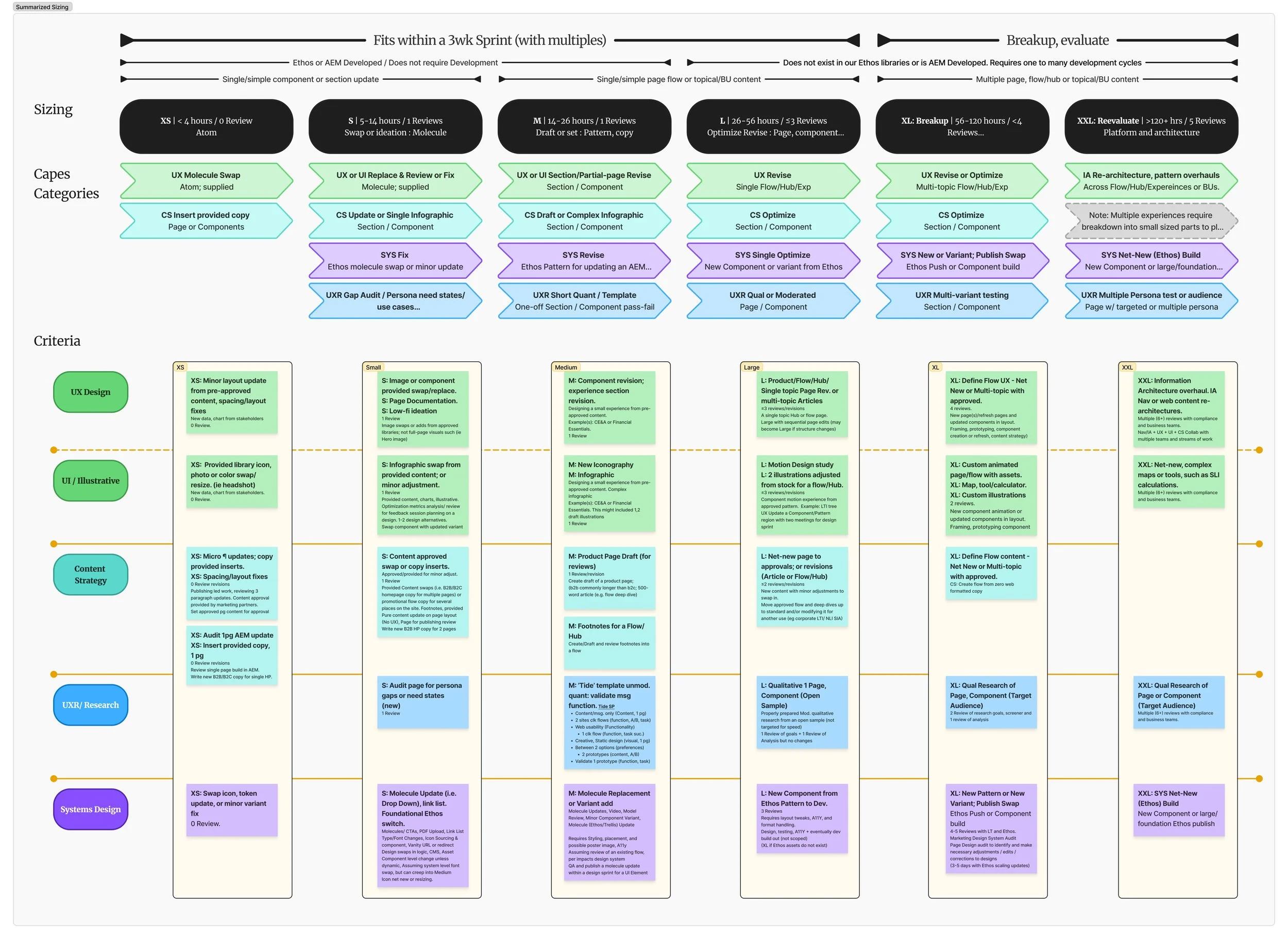
Case Study: TIAA Product Intake + AI Jira Ops
When greater output required sizing and readiness input.
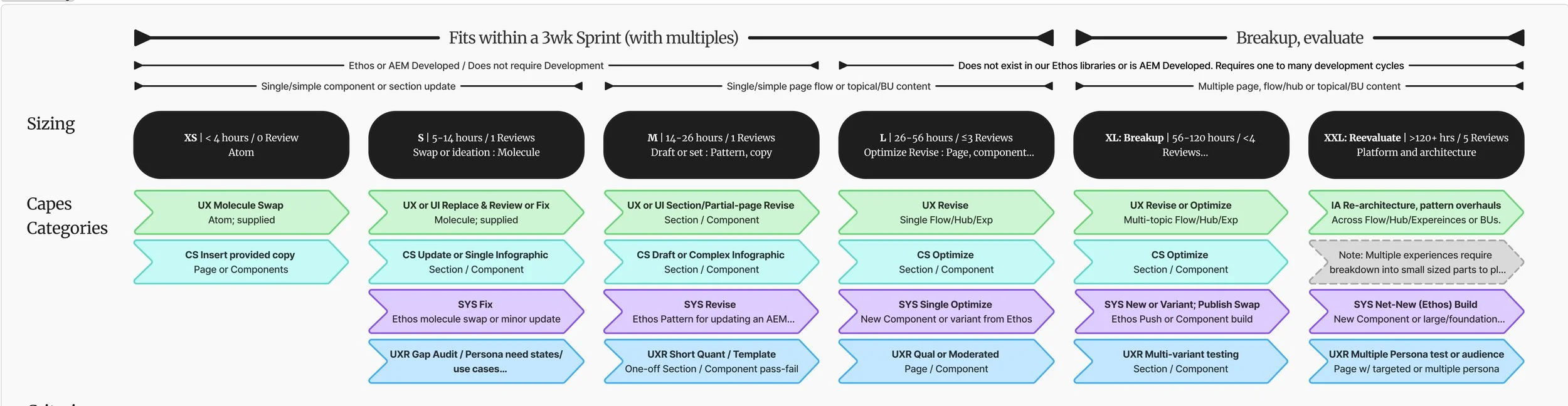
Core Problem: TIAA and Nuveen had no documented criteria for project readiness or priority, split across GTM (P1) and non-GTM (P2) initiatives with no shared framework to weigh them against each other. In the analysis, I found 41 touchpoints within their overall process.
Business Impact: TIAA (B2C) and Nuveen (B2B) had both unique and common criteria for execution. The fidelity and sizing made it nearly impossible to plan realistic roadmaps that coordinate go-to-market campaigns.Without a way to assess readiness against priority, a backlog of yearly initiatives across 5 business units grew unhealthy and uncoordinated.
Solution: Built a t-shirt sizing and weighted prioritization intake funnel, scoring readiness, feasibility, and business priority into a single number. Identified and tested 11 agentic AI pilots across the product process, applying a new Jira best practice knowledge architecture, delivered through a period of reduced staffing against promised targets.
Results: Accelerated development velocity up to ~41%. Moved a stalled 21-plus initiative backlog into regularly cadenced biweekly deployments with a 97% on-time SLA (impacted by staffing), backed by rebuilt Jira (TIAA) and Workfront (Nuveen) process documentation. NOTE: Industry-wide, 88% of enterprise agentic AI pilots fail to reach production due to evaluation gaps, governance friction, and model reliability cited (2025-2026 industry surveys).
Kaizen & Pierce product management

Team Product Discovery Workshop | 2015
Lean: Five principles of Kaizen institute on rapid change management to reduce waste, improve productivity, and reach process improvement in organizations:
Know your customer. Identify who you serve and what they value, so improvement effort targets outcomes that actually matter rather than internal preferences.
Let it flow. Aim for zero waste—eliminate anything (steps, delays, rework, excess inventory) that doesn't add value for the customer.
Go to Gemba. "Go to the real place" where work happens. Decisions and observations should be grounded in the actual process, not assumptions made in a conference room.
Empower people. Give teams clear goals, a supportive framework, and the authority to suggest and make changes. Improvement comes from the people doing the work.
Be transparent. Track performance with real data, made visible to everyone, so progress and problems are seen honestly.
“PIERCE” Team Collaborative Leadership Framework:
Participation: Encouraging everyone to collaborate, challenge, and own.
Independence of thought: There are no senior leaders, only higher thinking.
Elaboration: Asking “5 Whys” to frame the proper design challenge.
Role clarity: Define distinct responsibilities with flexible structure for cross-functional support.
Communication: Asking people to clarify, define and use in context
Exploration: Ask “How might we” over “we can’t do this now.”
Secondary Case Studies
TIAA
AI-Assisted Behavioral App Management
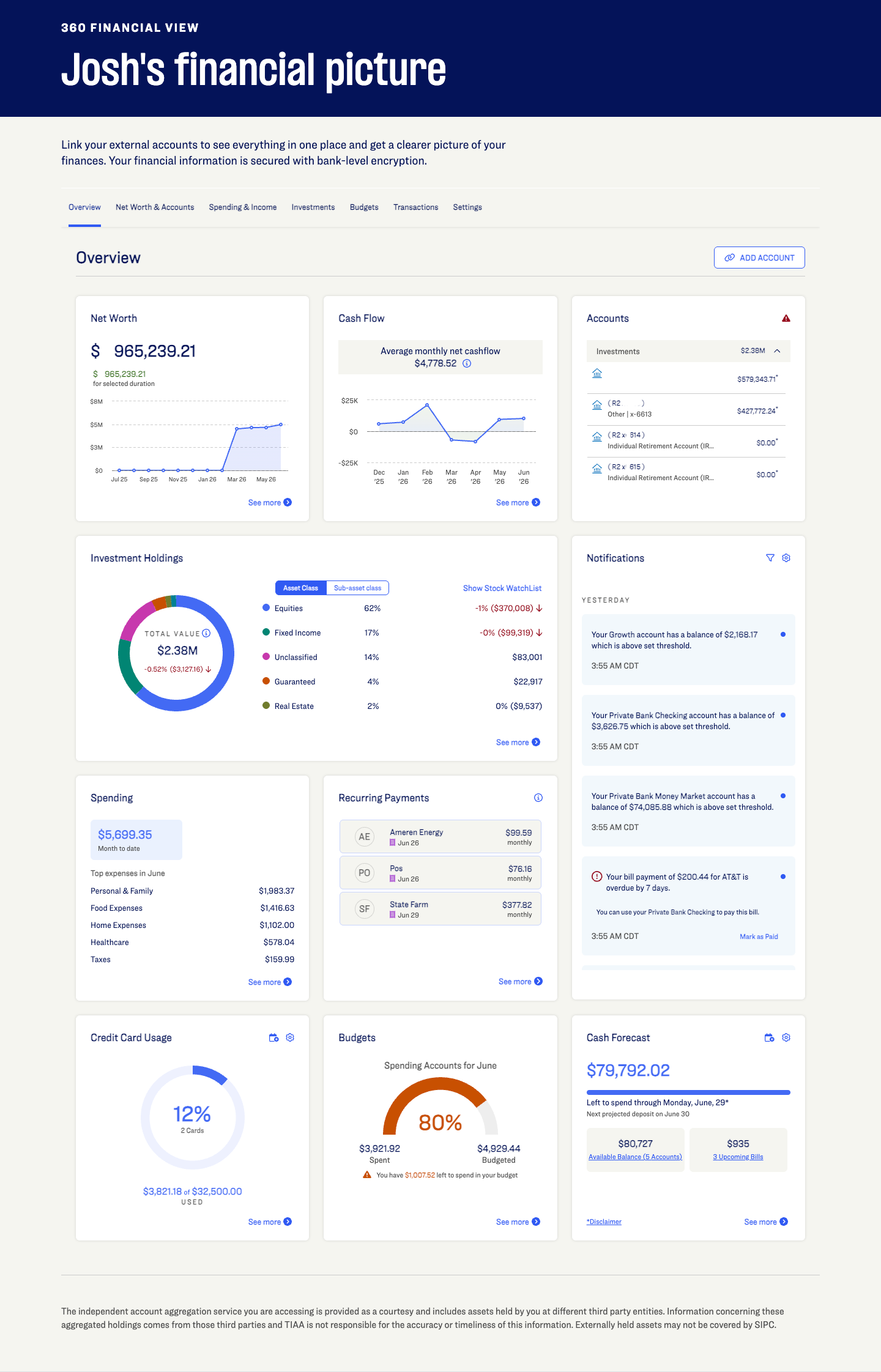
Case Study: TIAA Product Intake + AI Jira Ops
When a 11 week app development demand MoSCoW priorities and AI market analysis.
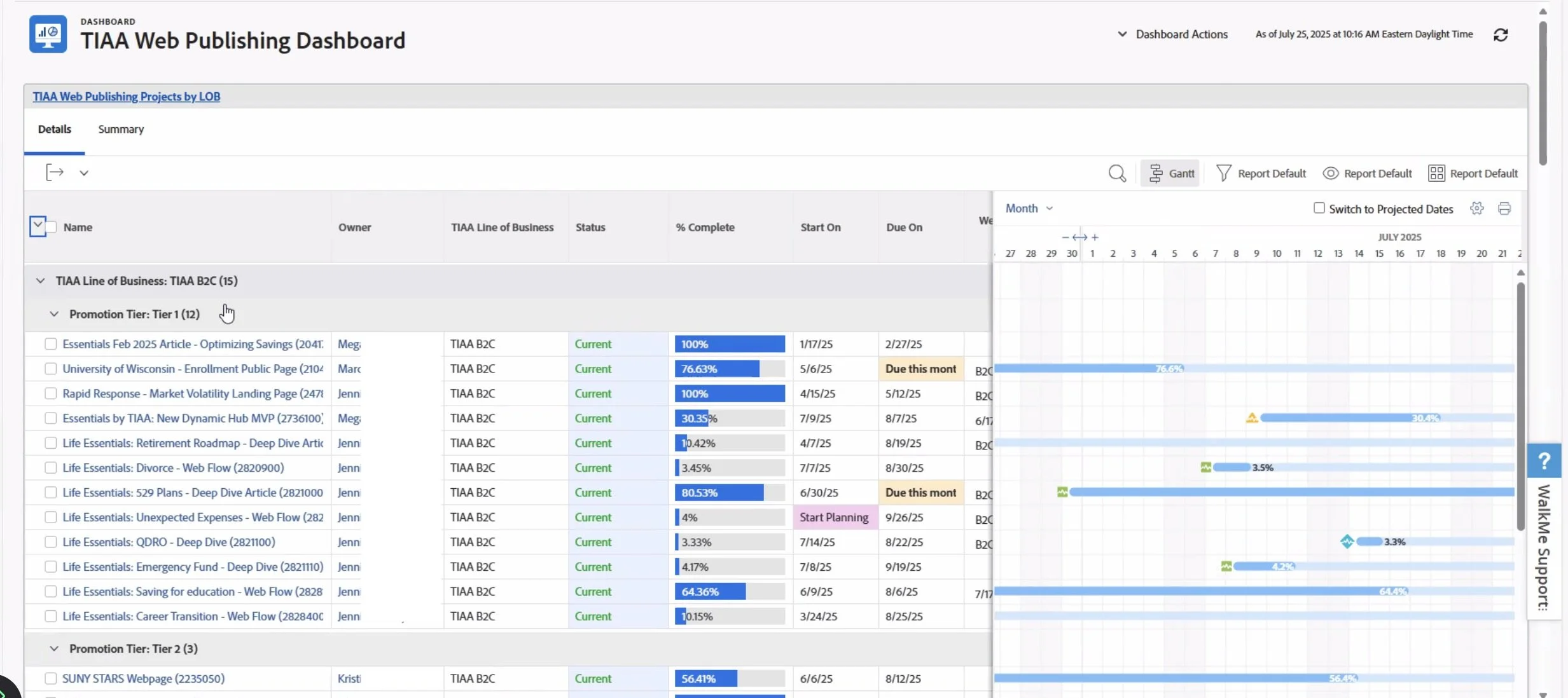
Core Problem: TIAA had no visibility into investor assets held outside the firm, limiting wealth management prospecting and rollover capture into the product pipeline during investor life-stages.
Business Impact: Institutional and wealth investors were leaving for competing firms across the planning-to-retirement journey, putting TIAA's $1.4T in assets under management at risk. TIAA only retains ~5% of assets in rollover at retirement or job change versus 19% for the average recordkeeper and 40%-plus for best-in-class retail (Schwab, Vanguard). Rollovers above $250K, go to external firms 51% of the time.
Solutions: Built a 0 to 1 personal finance app in 11 weeks with AI-driven spending pattern analysis, letting investors connect outside bank and investment accounts into one complete financial picture. Gave advisors visibility into investor life spending goals to sharpen prospecting.
Results: Lifted target wealth management prospecting to 63% to continue it’s exisitng $1.4T AUM. Industry-wide 401(k)-to-IRA rollover volume hit $701B in 2023, up from $404B in 2013, and is projected to reach roughly $1.3T a year by 2031. Closing even a fraction of TIAA’s gap (5% versus 19-40%) retention baseline achieved in the industry plausibly represents a $1B to $10B-plus annual opportunity in retained or newly captured AUM.
Case Study: CDP & CRM Product Upsell Optimizations
When a platform transformation required journey planning.

Core Problem: Sunwing had no blueprint for a unified customer data platform, especially during a pandemic that collapsed industry investment. Shifting to retention and deeper relationships, Sunwing needed a strategic and tactical plan with a pragmatic rollout that adds value at each release.
Business Impact: Risked entering the recovery with the same fragmented data foundation while competitors caught up. With the implementation of a new CDP, Sunwing needed a CRM sales ecosystem that delivers a clear picture of their customer travel preferences to automate marketing and communications.
Solution: Delivered a customer data platform roadmap and business case built on stakeholder and customer research with AOV milestones lift from a cohesive “flight to resort” customer experience.
Results: Positioned Sunwing as a first mover in customer data investment, drawing competitive attention that contributed to its eventual acquisition. WestJet announced its acquisition of Sunwing Vacations and Sunwing Airlines in March 2022, completing the deal in May 2023, external confirmation of the competitive interest this case describes.
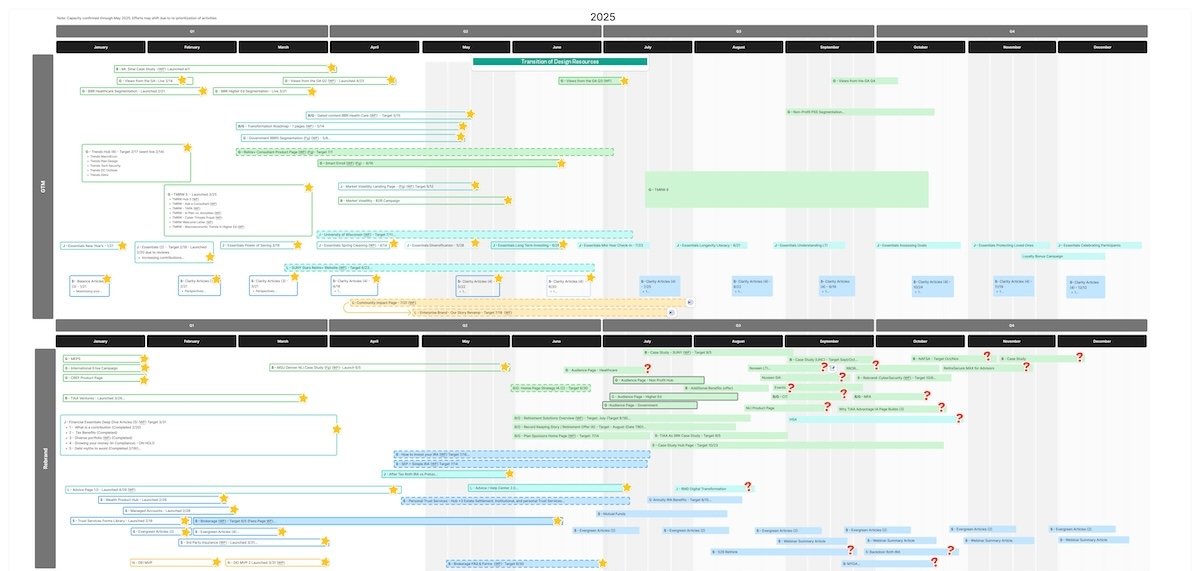


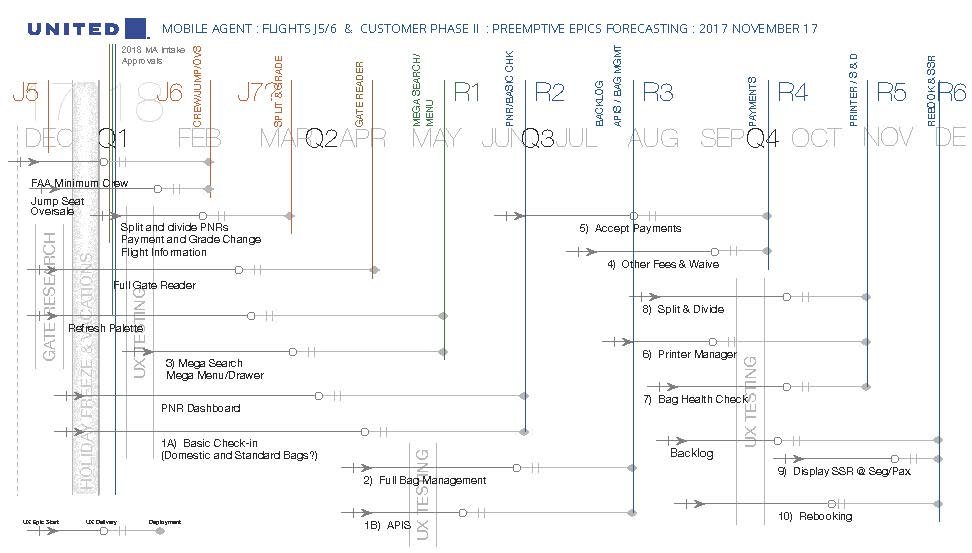
First Considerations in Prioritization
Tertiary Case Studies

United Airlines
Service Design Gate Modernization
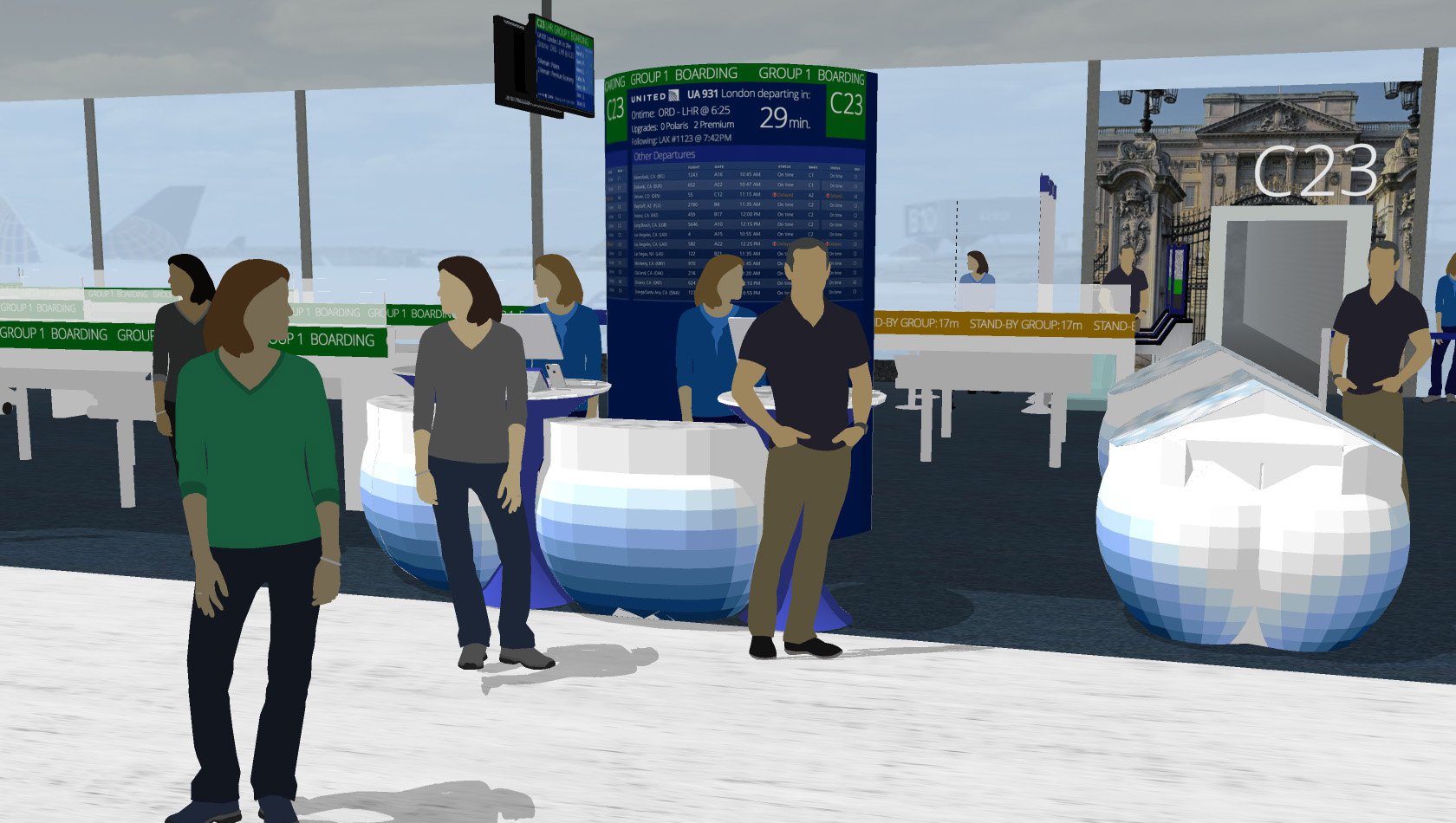
Tertiary Case Study: Product | Native App
When airport gate innovation demands vendor mgmt. to stay on business goals.

Core Problem: Legacy and managed airport gate podiums had locked agents into fixed, reactive tools for decades while passenger expectations shifted to flexible, mobile self-service across the airport.
Business Impact: Continued investment in legacy podium technology was no longer justifiable to staffing fixed-location tools that worked against where both technology investment and passenger CX scores no longer held ROI.
Solution: Deliver an executive augmented reality concept of aiport experience design ahead of the vendor’s own prototypes with recommended phased planning on legacy equipment into modular toolsets.
Results: Piloted in Cleveland in 2019, expanded to O'Hare and Denver with biometrics and mobile self-help. Program continued for years after the engagement ended. Independent ACSI data shows United's satisfaction score rose 3 points (67 to 70) between 2018 and 2019 during the Cleveland pilot launch that expanded to O'Hare and Denver.
CX metrics I use to prioritize